
Robinia slavinii
Robinia slavinii
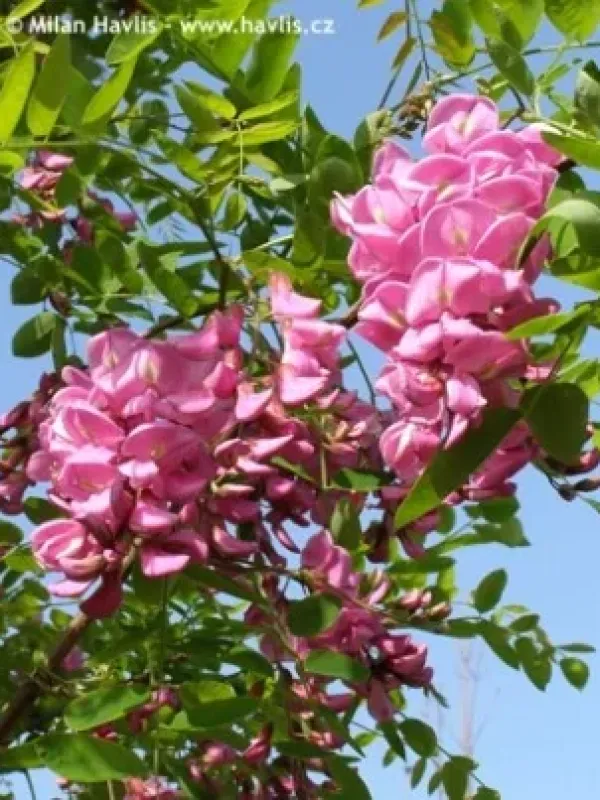
Description
Growing requirements
Robinia slavinii is a notable hybrid tree belonging to the Fabaceae (legume) family. It originated from a cross between Robinia pseudoacacia and Robinia hispida, combining fast growth characteristics with the attractive, showy blooms typical of its parent species.
The tree requires a location with full sun exposure to thrive and produce its signature abundant clusters of flowers. Adequate spacing is essential to ensure good air circulation, which helps maintain the overall health of the tree and reduces the risk of fungal infections.
Regarding soil, Robinia slavinii is best suited to light, well-draining, and moderately fertile soils. It does not tolerate waterlogged conditions, which can lead to root rot; therefore, selecting a site with good natural drainage or improving the soil structure is vital.
The climate requirements include a temperate environment. While it is hardy once established, young specimens benefit from shelter against strong, drying winds and extreme frost. Periodic watering during dry spells in the growing season is recommended for optimal development.
In terms of agricultural and horticultural use, this species is primarily valued as an ornamental tree in parks, estates, and urban landscaping projects. Additionally, it serves as an excellent honey plant, providing significant nectar sources for pollinators during its flowering window.
Main diseases and pests
The most common disease threats include leaf spots and powdery mildew, which typically appear during periods of high humidity and poor airflow. Managing the environment around the tree through pruning and proper site selection is the best preventive strategy.
Insect pests, such as leaf-rolling caterpillars and aphids, can pose a risk during the spring and early summer. Monitoring the foliage periodically allows for early intervention, often using environmentally friendly horticultural soaps or integrated pest management techniques.
Boring insects can occasionally attack the trunk, particularly if the tree is stressed by drought or environmental factors. Maintaining vigorous growth through appropriate fertilization and regular watering significantly reduces the susceptibility to such attacks.
Root system issues, such as fungal pathogens, often arise from poor soil conditions or excessive moisture. Ensuring that the soil remains aerated and not compacted is crucial for long-term survival and vitality of the tree.
Regular sanitation, which includes removing dead or diseased branches, is essential for maintaining the tree's health. By keeping the canopy clean and ventilated, the overall pressure from pests and diseases is significantly mitigated throughout the year.