
Lonchocarpus capassa
Lonchocarpus capassa
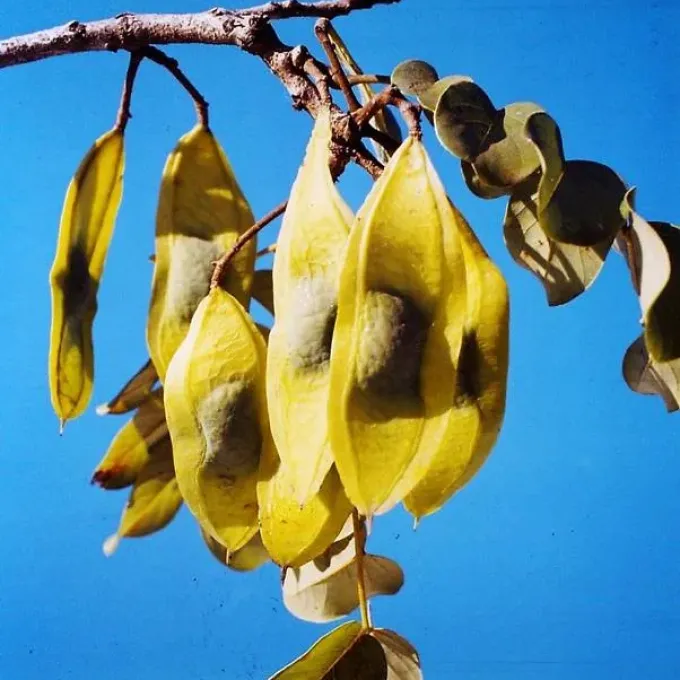
Description
Growing requirements
Lonchocarpus capassa, commonly known as the rain tree or apple-leaf, belongs to the Fabaceae family. This deciduous tree is native to the tropical and subtropical savannas of Southern and Eastern Africa, where it thrives in well-drained, nutrient-rich soils.
The species is highly valued for its drought tolerance, making it an excellent candidate for reforestation and agroforestry projects in arid and semi-arid regions. It prefers full sun exposure to ensure healthy foliage development and robust growth.
As a nitrogen-fixing legume, Lonchocarpus capassa plays a vital role in soil restoration and fertilization. This biological characteristic helps improve the chemical properties of degraded land, supporting other agricultural crops planted in the vicinity.
The tree reaches a moderate height and possesses a broad crown. It is sensitive to severe frost, which limits its commercial cultivation primarily to frost-free tropical or subtropical zones where temperatures remain stable throughout the year.
Economic utility is centered on its durable wood, which is utilized for small-scale construction and household tools. Additionally, the foliage provides essential fodder for livestock during the dry season when other forage sources are depleted.
Main diseases and pests
The primary pests affecting Lonchocarpus capassa are bruchid beetles, which frequently attack the seeds within the pods, significantly impacting the natural regeneration process and seedling survival rates.
Defoliating caterpillars represent another common threat to the tree, as massive outbreaks can lead to complete stripping of leaves, causing stress to the plant and reducing its photosynthetic capacity.
Fungal pathogens causing leaf spots and blight may emerge under conditions of extreme humidity or poor air circulation, particularly in nursery settings where young trees are kept in close proximity.
Wildlife, such as kudus and elephants in the native range, frequently browse on young saplings and strip the bark of mature trees, necessitating the use of physical protection in agroforestry management.
Competition from aggressive weeds during the establishment phase is a major challenge; failure to manage the surrounding vegetation can result in stunted growth and higher mortality rates among young plantations.