
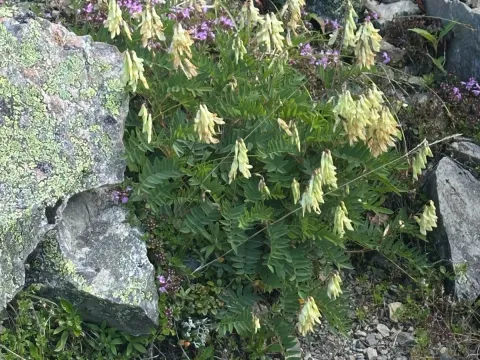
Hedysarum vicioides
Hedysarum vicioides
Sowing of Hedysarum vicioides is primarily conducted in the spring when soil temperatures reach 5–8 degrees Celsius, allowing seeds to utilize winter moisture reserves.
What the section contains
Hedysarum vicioides
The optimal seeding depth is 2–3 centimeters on heavy soils and up to 4 centimeters on lighter sandy loams, followed by rolling to ensure good soil-seed contact.
Seeding rates vary depending on the planting method, with row planting typically requiring higher volumes of seed compared to wide-row configurations.
Seedlings show slow initial growth, making early-stage weed control critical for successful crop establishment and long-term yield potential.
By the second and third years, the crop develops high tillering energy, enabling it to naturally outcompete weeds and provide dense soil coverage.
Hedysarum vicioides is a perennial herbaceous plant of the Fabaceae family, well-adapted to the harsh conditions of mountainous and subalpine regions.
The crop prefers well-drained, calcareous, or stony soils and is highly valued for its ability to fix atmospheric nitrogen via symbiotic bacteria.
It exhibits exceptional winter hardiness and drought tolerance, making it an excellent candidate for cultivation in regions with unpredictable weather patterns.
Full sun exposure is required for healthy development, as the plant does not perform well in shaded conditions and needs light for optimal seed formation.
In terms of soil management, it acts as a superior meliorant, improving soil structure and organic nitrogen levels through its deep root system.
The primary use of this crop is the production of high-protein green fodder and high-quality hay for livestock nutrition.
Yield efficiency is highly dependent on the harvesting phase, with peak nutritional values achieved at the onset of the flowering period.
Seed production can be variable, necessitating the presence of pollinators like wild bees to ensure high yields and consistent seed quality.
The plant demonstrates excellent longevity, remaining productive on the same field for 7–10 years, which reduces the need for frequent reseeding.
It integrates well into grassland mixtures with perennial grasses, creating high-yield meadow systems suitable for long-term agricultural use.
Diseases in this crop often arise under excessive moisture conditions, leading to root rot and fungal infections of the aerial parts of the plant.
Common pests include weevils, which can damage reproductive organs and significantly impact seed yields during peak infestation periods.
Proactive disease management involves strictly following seeding rates, ensuring proper drainage, and utilizing certified, treated seed batches.
Monitoring for insect pests is essential during the budding phase, which is when the plant is most susceptible to significant damage.
When chemical intervention is required, it is crucial to use authorized insecticides and strictly observe protocols to protect local pollinator populations.
Hay harvesting should take place during the mass flowering stage to ensure the highest protein content in the stems and leaves.
For seed collection, harvesting begins once the majority of pods turn brown, minimizing seed loss due to shattering during mechanical operations.
Post-harvest processing requires thorough cleaning and drying to standard moisture levels to ensure the longevity of seeds in storage.
During the harvest of green mass, operators should use equipment settings that preserve the root crown to support successful regrowth.
Timely harvesting prevents the lignification of stems, significantly increasing the palatability and overall digestibility of the forage for livestock.