
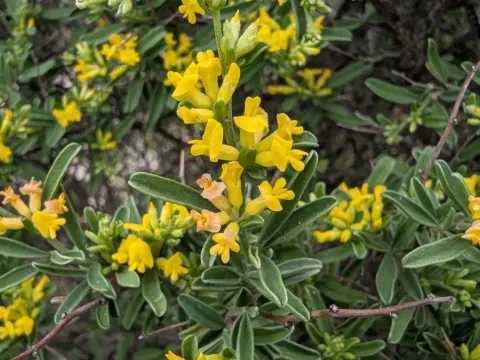
Hermann's Kidney Vetch
Anthyllis hermanniae
Hermann's Kidney Vetch (Anthyllis hermanniae) is a perennial, low-growing woody shrub that belongs to the legume family (Fabaceae). Native to the Mediterranean basin, this plant is well-adapted to rugged, limestone-rich soils and sun-drenched rocky outcrops.
What the section contains
Hermann's Kidney Vetch
The plant exhibits unique morphological traits, including stiff, spiny branches and small, densely pubescent leaves that reflect sunlight and reduce water loss. These features allow it to thrive in arid conditions where many other plants fail to survive.
Regarding soil requirements, this species demands exceptionally well-drained conditions. It is intolerant of heavy, clayey, or waterlogged soils, which cause immediate stress and root rot. It prefers alkaline to neutral pH levels, reflecting its evolutionary niche in carbonate-rich landscapes.
From an agricultural and ecological perspective, the plant is valued for its ability to stabilize soil and prevent erosion. Like many other members of the Fabaceae family, it hosts nitrogen-fixing bacteria, contributing positively to soil nitrogen levels in nutrient-poor environments.
Hermann's Kidney Vetch is low-maintenance, requiring little more than full sun and minimal intervention. It is increasingly utilized in xeriscaping and sustainable land restoration projects, particularly in Mediterranean climates where water scarcity is a primary concern.
The most significant threat to the health of Anthyllis hermanniae is environmental stress caused by poor soil drainage. Waterlogging leads to oxygen deprivation in the root zone and facilitates the proliferation of soil-borne pathogens.
Fungal infections, such as powdery mildew or rust, can occur if the plant is grown in areas with poor airflow or high relative humidity. Maintaining sufficient spacing between specimens is a critical preventative measure.
Insect pests, primarily aphids and certain species of weevils, can cause damage to the tender growth tips during the spring months. Monitoring these populations is essential for maintaining the aesthetic and structural integrity of the shrub.
Integrated Pest Management (IPM) practices, including the encouragement of natural predators, are recommended over broad-spectrum chemical interventions to protect the plant's symbiotic root partners.
Regular sanitation, including the removal of dead or diseased woody tissue, helps maintain plant vigor and prevents the accumulation of inoculum that could lead to widespread fungal disease outbreaks.