
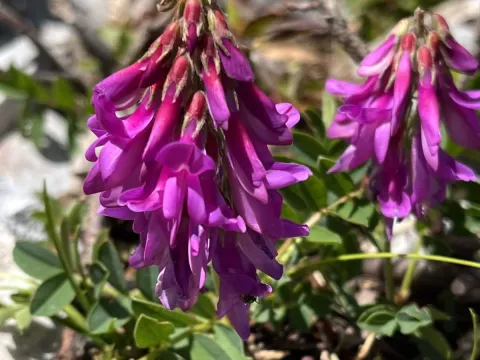
Hedysarum hedysaroides
Hedysarum hedysaroides
Sowing of Hedysarum hedysaroides is best performed in early spring or late summer, ensuring the soil retains adequate moisture to support consistent seedling emergence.
What the section contains
Hedysarum hedysaroides
The seeds possess a hard coat, so mechanical or chemical scarification is recommended before planting to improve germination rates and uniformity in the field.
Seeds should be planted at a depth of 1.5 to 3 centimeters, depending on soil texture, to ensure they remain in contact with soil moisture while having sufficient energy to reach the surface.
Using a standard drill seeding method helps maintain optimal plant density, reducing competition between individual plants during the slow initial growth stage.
As this species establishes slowly in its first year, weed management during this period is critical to ensure that the young seedlings are not outcompeted.
Hedysarum hedysaroides is a hardy member of the Fabaceae family, naturally adapted to harsh environments including alpine and subalpine meadows where temperatures can be extreme.
This crop prefers well-drained soils, ideally with a neutral or alkaline pH, as it is highly susceptible to root damage caused by waterlogged or acidic conditions.
With its deep taproot system, the plant exhibits excellent drought tolerance, allowing it to thrive in arid conditions where shallow-rooted crops would fail.
It is a photophilous plant that requires full sunlight for optimal growth; excessive shading from taller vegetation will significantly suppress its development.
The species excels in rocky or gravelly soils with low organic content, making it a valuable candidate for soil stabilization and forage production on marginal lands.
The crop is primarily utilized for high-quality hay and forage production, as it offers a superior protein profile and vitamin content for livestock nutrition.
Productivity peaks in the second and third years of establishment, with well-maintained stands providing consistent yields for several years thereafter.
Hedysarum hedysaroides is capable of vigorous regrowth after cutting, which allows farmers to harvest one or two cuttings per season depending on the local climate.
Seed harvesting should be timed carefully when the pods turn brown but before they start shattering, ensuring maximum recovery of seed stock for future planting.
Optimizing harvest timing at the early blooming stage ensures the best balance between biomass quantity and the nutritional quality of the collected forage.
Fungal diseases, including various leaf spots and rusts, pose the greatest threat to plant health, particularly during seasons characterized by high humidity and poor air circulation.
Root rot is a common issue in soils with poor drainage, often leading to patchy stands and decreased long-term yield potential across the field.
Insect pests such as clover root curculio can damage the root systems, thereby inhibiting the plant's symbiotic nitrogen fixation and overall vigor.
Leaf-eating insects can cause significant damage to the foliage during the summer months, which may reduce the quality and quantity of the harvest if left unmanaged.
- Implement a strict crop rotation schedule.
- Monitor field conditions for early pest detection.
- Apply fungicide treatments if disease symptoms appear.
- Ensure adequate field drainage to prevent root diseases.
Harvesting for forage should take place during the mass flowering stage, which ensures the highest concentration of digestible protein and energy for livestock.
Mowing should be performed at a height of approximately 5-7 centimeters to protect the plant's growing points and encourage rapid recovery of the stand.
Mechanical tedding and windrowing during the drying process help maintain the forage's green color and prevent the loss of nutrient-rich leaves.
Storage facilities must be dry and well-ventilated to prevent the development of mold, which can degrade the nutritional value and safety of the stored hay.
By following proper harvesting practices, farmers can extend the longevity of the field and ensure that the forage remains a premium feed throughout the winter.