
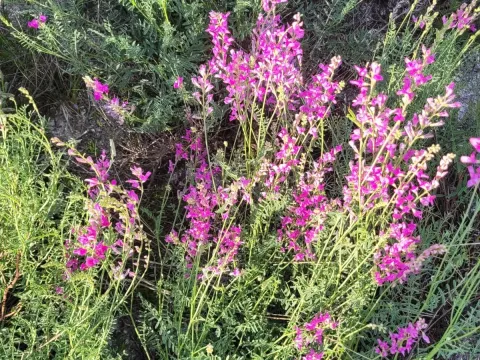
Hedysarum cretaceum
Hedysarum cretaceum
Sowing Hedysarum cretaceum should be done in early spring as soon as the soil is workable to take advantage of soil moisture. Early establishment is crucial for developing a strong taproot system before the summer heat.
What the section contains
Hedysarum cretaceum
Seeds should be planted at a depth of 2–3 centimeters. This depth ensures proper moisture availability while allowing seedlings to reach the surface without depleting their energy reserves.
The seeding rate varies depending on soil conditions and seed purity, usually ranging from 10 to 15 kg per hectare. Precise row spacing is important to minimize competition between individual plants.
Inoculation of seeds with specific nitrogen-fixing bacteria is highly recommended for new fields. This symbiotic relationship is vital for the plant's health and ability to thrive in poor soils.
Once planted, light compaction of the soil improves contact between seeds and the soil, significantly increasing germination rates, especially in regions with erratic rainfall patterns.
Hedysarum cretaceum is a member of the Fabaceae family, uniquely adapted to calcareous and chalky soils. Its natural habitat is characterized by thin, rocky substrates where other crops typically fail.
This crop has a high demand for solar radiation and should be grown in open, sun-exposed areas. It is sensitive to shading from surrounding vegetation, which can retard its development.
Well-drained soil is essential. While the plant is extremely drought-tolerant once established, it cannot tolerate waterlogging, which rapidly leads to root system degradation.
Hedysarum cretaceum is remarkably cold-hardy, adapting well to fluctuating temperatures. It is an excellent choice for reclamation projects and stabilizing slopes susceptible to soil erosion.
The plant exhibits deep root penetration, which allows it to stabilize the soil structure while accessing nutrients and water in harsh environments where other plant life struggle to survive.
The primary use of this crop is as a high-protein fodder source. It provides a stable supply of nutritious forage for livestock, particularly in arid, mountainous, or chalky regions.
Yields of green mass are influenced by soil nutrient levels, especially phosphorus and potassium. While not demanding of fertile soil, the plant responds positively to balanced fertilization.
The crop is known for its ability to regenerate quickly after mowing or grazing. Proper pasture management is required to ensure long-term productivity and prevent overgrazing stress.
Hedysarum cretaceum also serves as a significant honey plant, contributing to the local ecosystem and supporting pollinators, which indirectly boosts agricultural biodiversity.
With proper care, fields can be productive for 5–7 years, making it a reliable and cost-effective choice for farmers managing extensive or non-arable land.
The main threats to the plant include fungal diseases such as powdery mildew, which can occur during periods of high humidity. Proactive monitoring is essential to prevent significant outbreaks.
Insects like weevils can cause damage to the reproductive structures, leading to a substantial decrease in seed yields. Integrated pest management strategies are often necessary.
Root rot is primarily a symptom of improper drainage. In compacted or waterlogged soils, the root system is highly susceptible to opportunistic pathogens that cause plant decline.
Weed control is critical during the first year of establishment. If weeds overwhelm the seedlings, the success of the entire field establishment is at risk, necessitating early intervention.
- Regular health assessment of fields.
- Rotation strategies to disrupt pest cycles.
- Maintenance of proper drainage systems.
For high-quality hay, harvesting should occur during the early flowering stage. This timing captures the optimal balance of leaf-to-stem ratio and nutritional content before the stems become overly fibrous.
Rapid drying is essential to maintain feed quality. Mechanical turning of the forage in the field helps ensure uniform moisture loss and prevents leaf shedding, which holds the highest nutritional value.
Seed harvesting should be timed when the pods turn brown but before they shatter. Timely collection in the early morning hours helps reduce field losses due to seed shedding.
Post-harvest processing involves cleaning the seeds of plant debris and drying them to a stable moisture level to ensure long-term viability and storability.
Storage should be in cool, dry conditions protected from pests. Following these practices ensures high germination potential and reliable performance for future planting seasons.