
Glycyrrhiza acanthocarpa
Glycyrrhiza acanthocarpa
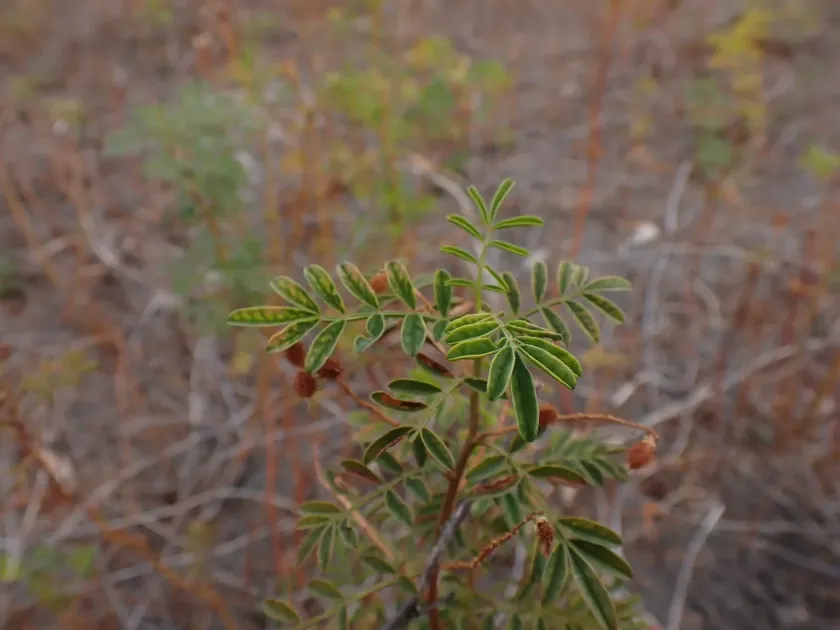
Description
Sowing dates
Sowing of Glycyrrhiza acanthocarpa is typically performed in early spring once soil temperatures reach consistently above 10 degrees Celsius. Seed scarification is recommended to improve germination rates.
The crop is usually sown in rows with a spacing of 60 to 70 centimeters, which allows for mechanical weed control and sufficient aeration between the growing plants.
Seeds should be planted at a depth of 2 to 4 centimeters. Maintaining proper soil moisture levels is critical during the initial weeks to ensure uniform seedling emergence.
Since the initial growth stage is slow, effective weed management is essential to prevent competitive exclusion during the first season of cultivation.
Vegetative propagation via root cuttings is also a viable method, often resulting in more robust and uniform initial growth compared to direct seeding.
Growing requirements
Belonging to the Fabaceae family, this species is well-adapted to arid environments and exhibits significant drought resistance once established.
The preferred soil type is well-drained sandy loam. Excessive moisture or heavy clay soils are detrimental and significantly increase the risk of root diseases.
Glycyrrhiza acanthocarpa thrives in open, sunny locations with minimal shading. Full sun exposure is necessary for healthy biomass production and root development.
The plant is known for its tolerance to saline soils, making it an excellent candidate for the restoration of degraded agricultural lands in arid climates.
Moderate temperatures are ideal, though the plant displays hardiness toward the temperature fluctuations commonly found in its natural habitat range.
Main diseases and pests
The most common biological threats are fungal pathogens, specifically those causing root rot, which are triggered by waterlogged conditions in the root zone.
Insects such as aphids and various leaf-feeding beetles can cause significant damage to the foliage, thereby reducing the plant's photosynthetic capacity.
Soil-borne pests like wireworms pose a specific danger to the young root systems, often leading to reduced stand density if left unmanaged.
Preventative strategies include strict adherence to crop rotation protocols and regular scouting for early signs of infestations or pathogenic symptoms.
Effective management includes integrated pest control approaches, prioritizing cultural practices while utilizing chemical interventions only when thresholds are exceeded.
Harvesting
Harvesting is conducted during the dormant period, typically in the autumn months, to ensure that the active compound concentration in the roots is at its maximum.
Deep-digging equipment is utilized to extract the roots, which can grow quite deep. Minimizing mechanical damage during extraction is essential for preserving the quality of the raw material.
After extraction, roots must be washed thoroughly to remove soil and dried using controlled temperature settings to prevent degradation or fungal contamination.
The harvested roots are primarily used in the pharmaceutical industry for their medicinal properties, as well as in the food sector as a natural sweetener.
Following harvest, field maintenance includes debris removal and soil structure preparation to ensure sustainability for future planting or soil recovery cycles.