
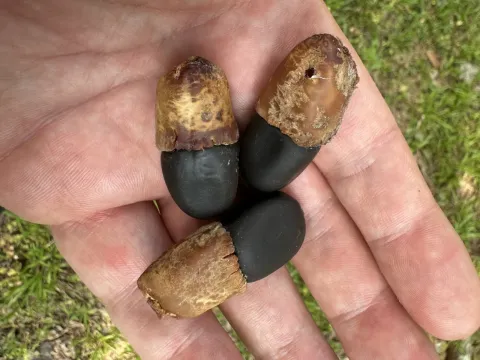
Afzelia xylocarpa
Afzelia xylocarpa
Afzelia xylocarpa seeds require pre-treatment, specifically mechanical scarification of the hard seed coat, to facilitate moisture absorption and germination. In wild settings, this process is naturally aided by environmental exposure or animal digestion.
What the section contains
Afzelia xylocarpa
Sowing in forest nurseries should be conducted in well-drained, humus-rich substrates to support early root development. The ideal planting time is at the beginning of the rainy season to ensure seedlings receive consistent moisture during their initial growth phase.
Seedlings require partial shading during their first months to prevent damage from intense tropical sunlight. The use of shade netting or natural forest canopy cover is recommended in nursery conditions to maintain a stable microclimate.
Transplanting to the field is performed once the saplings reach a height of 30–50 cm and have developed a robust taproot system. This size ensures the plants are sufficiently resilient to compete with local herbaceous vegetation in a plantation environment.
Forestry planting strategies prioritize spacing that ensures adequate light penetration for each tree as it matures. As a slow-growing species, Afzelia requires long-term planning and dedicated management to achieve successful plantation establishment.
Afzelia xylocarpa belongs to the Fabaceae family and is a highly valued timber species native to the tropical forests of Southeast Asia. It thrives in well-drained soils and is sensitive to waterlogging, which can cause significant root rot.
The culture requires consistently high temperatures throughout the year and is intolerant of frost, restricting its cultivation to tropical and subtropical climates. Adequate rainfall with a distinct wet season is essential for optimal growth rates.
While the tree is light-demanding, young saplings exhibit a degree of shade tolerance, allowing for enrichment planting within degraded forest ecosystems. As the trees age, they require full sun to develop a dense canopy and high-quality heartwood.
Soil requirements include a fertile top layer and good structural aeration. The species performs poorly on saline or heavily compacted clay soils, where physical barriers can hinder the development of its deep primary root structure.
Agronomic management involves regular weeding around the base of the trees during the first few years. Reducing competition for water and nutrients is critical to accelerating the growth rate and improving the overall health of the forest stand.
The primary economic value of Afzelia xylocarpa lies in its exceptionally durable timber, often traded as "doussie" or "krai." Yield is typically measured in cubic meters of merchantable timber per hectare at the conclusion of the long rotation cycle.
The wood is prized for its high density, rot resistance, and striking reddish-brown color, making it a premium material for luxury furniture, high-end flooring, and specialized marine construction.
The maturation of high-quality heartwood takes several decades, positioning the species as a long-term asset in sustainable forestry. Thinning operations are conducted periodically to remove weaker stems and promote the growth of the most promising timber-producing trees.
Beyond timber, the species has significant potential in traditional medicine and pharmacology. Bark and seed extracts are being researched for their bioactive compounds, offering potential secondary value in the pharmaceutical industry.
Yield stability depends on strict adherence to sustainable harvest practices and protection against illegal logging. Proper management preserves the genetic stock while ensuring a steady economic return for landowners and local communities.
Stem borers and other wood-boring insects represent a significant threat to Afzelia xylocarpa, as their larvae can cause internal damage to the trunk, lowering the technical value of the timber. Integrated pest management is necessary to monitor and control infestations.
Fungal pathogens, particularly those causing leaf spot or root rot, may occur if soil moisture levels are not properly managed. Selective sanitary felling of infected individuals is an effective method to prevent the spread of diseases within a plantation.
Young saplings are highly vulnerable to browsing by rodents and large herbivores. Protecting the perimeter of the planting site with fences or individual tree guards is a vital requirement for the survival of the young crop.
Human activities, including habitat loss and unsustainable harvesting, remain the primary threats to the species' natural populations. Strict environmental regulations are required to maintain biodiversity and prevent further decline.
Regular plantation health monitoring is recommended to detect early signs of nutrient deficiency, pest activity, or leaf drop. Proactive intervention ensures the crop reaches its full potential, maintaining the ecological and economic integrity of the site.