
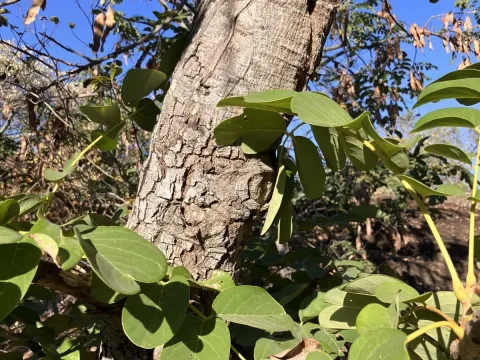
Aganope
Aganope
Aganope is a genus of woody vines belonging to the Fabaceae family. As tropical perennial plants, they naturally propagate through seeds, often occurring in diverse forested habitats.
What the section contains


Aganope
In a controlled cultivation setting, seed propagation requires mechanical or chemical scarification of the hard seed coat to ensure water absorption and successful germination.
Sowing should take place in well-draining, humus-rich soil, preferably during the onset of the wet season when temperatures are consistently warm.
Seedlings exhibit slow early development and require proper structural support immediately to facilitate their climbing habit and vertical growth.
Care must be taken to provide filtered sunlight to young sprouts, as they are sensitive to intense direct UV radiation during their initial stages of life.
Aganope thrives in tropical and subtropical climates characterized by high atmospheric humidity and minimal seasonal temperature fluctuations.
The ideal soil profile consists of fertile, loamy substrates with a neutral to slightly acidic pH and excellent drainage capacity to prevent root hypoxia.
These plants are photophilous but typically adapt to the light conditions of the forest canopy, requiring a balance between light exposure and humidity.
Adequate water supply is crucial; however, the soil must never be waterlogged, as this is the most common cause of mortality in cultivated Aganope specimens.
Application of organic mulching can help maintain soil moisture levels and provide the necessary nutrients for the vines to sustain vigorous vegetative growth.
Yield metrics for Aganope are not standardized due to its classification as a non-commodity plant and the lack of large-scale industrial plantations.
Production values depend on specific parts of the plant being harvested, such as leaves or seeds for phytochemical research or medicinal applications.
Wild populations offer inconsistent yield patterns, heavily influenced by local ecological conditions, pollinator activity, and micro-climatic stability.
In experimental settings, sustainable harvesting of green biomass can be achieved through pruning techniques that encourage branching and plant regeneration.
The time interval between planting and the first significant harvest is considerable, given the natural growth pace of these woody lianas.
The primary threats to Aganope include fungal pathogens like Phytophthora or Rhizoctonia, which target the root system in overly moist and stagnant environments.
Leaf-feeding insects and various tropical caterpillars can cause significant defoliation, particularly during the peak of the rainy season when pest activity is high.
Environmental degradation, specifically deforestation, poses a major threat to the survival of natural populations and the availability of genetic diversity.
Viral infections can affect the health of the vine, often manifesting as stunted growth or leaf chlorosis, which are difficult to manage in field conditions.
- Root rot due to poor soil drainage.
- Fungal leaf spots during high humidity.
- Damage from wood-boring insects.
Harvesting should be conducted with precision tools to ensure that the structural integrity of the main vine is preserved for future regrowth.
Seeds are collected at the stage of physiological maturity when the pods dry out naturally, turning a characteristic brown or grey color.
When harvesting leaves or bark, it is essential to follow a staggered rotation schedule to prevent exhausting the plant's metabolic reserves.
Post-harvest handling must include immediate removal of field debris and rapid drying in a well-ventilated space to prevent microbial contamination.
The final product should be stored in cool, dark environments to preserve the integrity of the secondary metabolites found within the plant tissues.