
Stillingia linearifolia
Stillingia linearifolia
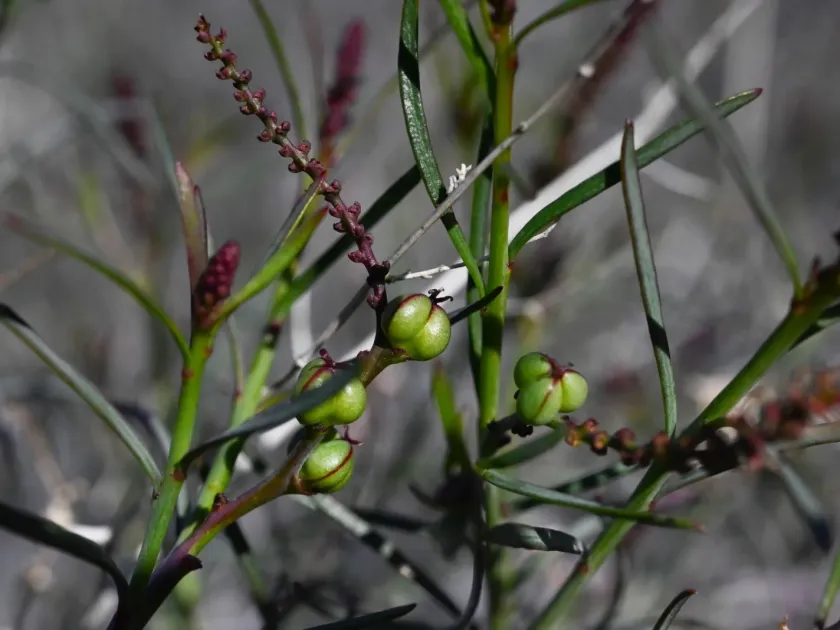
Description
Growing requirements
Stillingia linearifolia is a perennial herbaceous plant belonging to the Euphorbiaceae family. It is native to the arid and semi-arid regions of North America, where it thrives in rocky desert environments.
The plant is anatomically specialized for water conservation, featuring narrow, linear leaves and a deep-reaching taproot. These adaptations allow it to survive in environments where rainfall is scarce and unpredictable.
Regarding soil requirements, this culture demands excellent drainage. Sandy or stony soils with low organic content are ideal, as they prevent the roots from remaining in contact with standing water for extended periods.
The climate must be characterized by high solar radiation and warm temperatures. It requires a significant amount of direct sunlight to maintain its structural integrity and encourage regular, slow-paced growth.
Cultivation techniques involve mimicking the natural habitat conditions. Minimal soil disturbance and careful monitoring of irrigation intervals are essential to prevent the physiological collapse associated with overwatering.
Main diseases and pests
The most significant threat to Stillingia linearifolia is fungal infection triggered by moisture retention. Root rot remains the primary cause of plant death in managed agricultural or horticultural settings.
Pest issues often include infestations of spider mites or mealybugs, especially in confined environments. These insects exploit the plant's sap, leading to stunted growth and leaf discoloration if left untreated.
Preventive measures include maintaining proper air circulation around the plants and avoiding overhead irrigation. If pests are detected, targeted application of soft acaricides or manual cleaning is recommended.
It is important to avoid the use of heavy-duty chemical fertilizers, which may burn the sensitive root system. Organic-based, slow-release nutrient sources are preferred in low-input cultivation models.
Regular monitoring of the soil moisture profile is the best defense against major threats. By keeping the root zone dry and well-aerated, growers can minimize the risk of pathogen colonization significantly.