
Queen's delight
Stillingia sylvatica
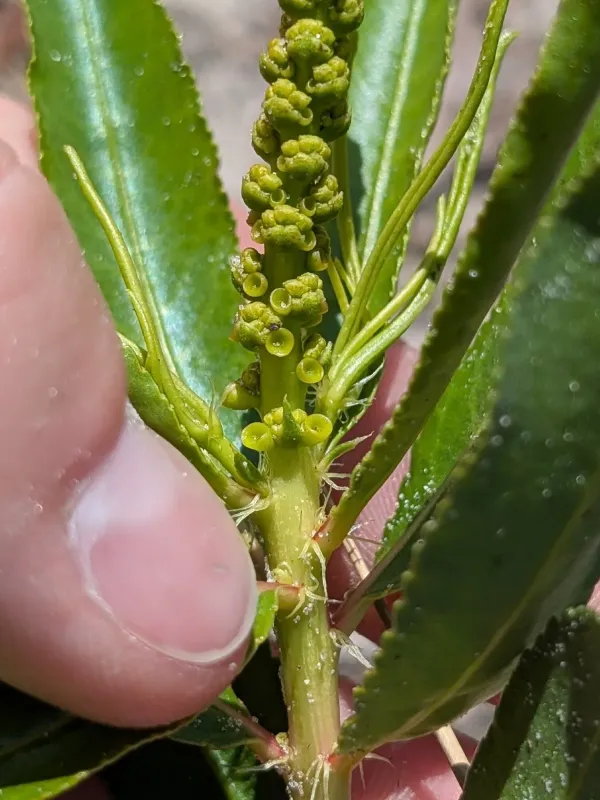
Description
Growing requirements
Queen's delight (Stillingia sylvatica) is a herbaceous perennial plant belonging to the Euphorbiaceae family. Native to the southeastern United States, it thrives in sandy, well-drained soils and open forest environments.
The plant is distinguished by a deep taproot, which is its most valuable part in medicinal terms. The above-ground growth consists of upright stems that bloom in early summer with small, yellowish flowers characteristic of the spurge family.
For successful cultivation, the crop requires full sun exposure and excellent soil drainage. It is highly drought-tolerant once established, but it is very sensitive to waterlogged conditions, which lead to root damage.
The ideal soil profile should be sandy or gravely with a slightly acidic to neutral pH level. Improving soil structure through the addition of organic matter is recommended, but over-fertilization should be avoided to prevent excessive leafy growth at the expense of root development.
Regarding climate, this species prefers warm growing seasons. It has a high adaptive capacity to heat, but cold winter protection is necessary in colder hardiness zones to maintain the longevity of the perennial root stock.
Main diseases and pests
The most common disease problems involve root rot and stem decay. These are almost always caused by poor soil drainage or excessive irrigation, which encourages the growth of pathogenic fungi in the root zone.
Insect pests such as aphids and spider mites can attack the foliage during dry and hot spells. These pests weaken the plant by feeding on sap, potentially leading to yellowing leaves and reduced vigor.
Cultural control, such as proper spacing to ensure adequate airflow, is the primary defense against foliage diseases. Preventing overcrowding is essential for managing moisture levels on the leaves.
In some regions, small mammals may be attracted to the roots. Physical barriers or the use of companion planting can help mitigate the risks of damage from wildlife.
Monitoring for signs of leaf spots is recommended during high humidity months. If an infestation occurs, targeted biological control methods are preferred to preserve the medicinal quality of the raw material.