
Sudanese Spurge
Euphorbia sudanica
Description
Growing requirements
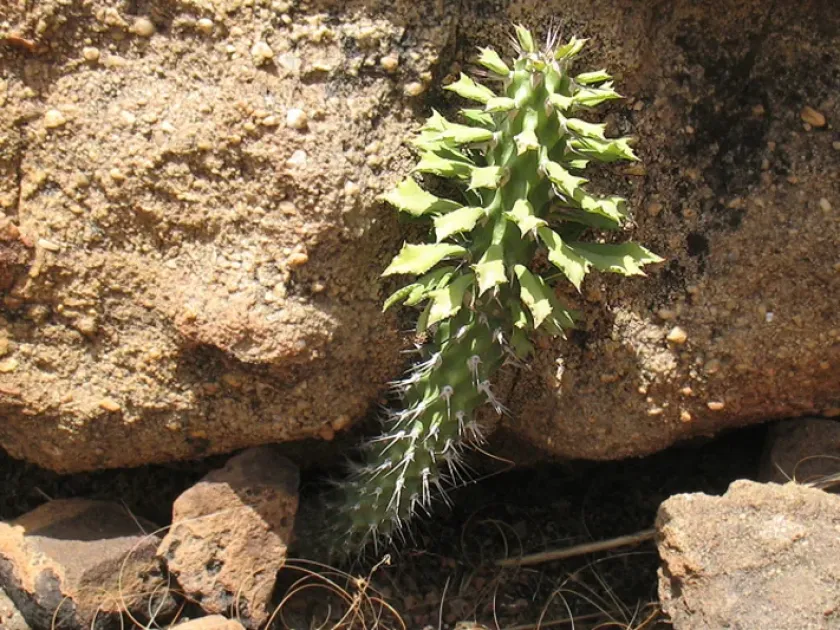
Sudanese Spurge (Euphorbia sudanica) is a distinct member of the Euphorbiaceae family. This hardy succulent is native to the arid landscapes of Sudan, adapted to thrive in environments with sparse rainfall and intense solar radiation.
Botanically, it is recognized for its fleshy, succulent stems that serve as water reservoirs. The plant morphology often includes spines, which act as a defensive mechanism against herbivores roaming the dry savannahs and desert fringes.
Regarding cultivation requirements, Euphorbia sudanica demands full sun exposure to maintain its structural integrity and health. Shade-grown specimens often suffer from etiolation, leading to weak stem growth and increased vulnerability to physical damage.
Soil conditions are critical for the successful growth of this crop. It requires a well-draining, sandy or rocky substrate; any water retention in the root zone must be avoided at all costs to prevent tissue decay and fungal infections.
The economic value of this species lies in its role in xeriscaping and soil conservation in dry climates. By anchoring loose soil and requiring minimal irrigation, it serves as a sustainable solution for land management in arid agricultural zones.
Main diseases and pests
The most prevalent threats to Euphorbia sudanica involve fungal pathogens, primarily root rot (Phytophthora spp.), triggered by excessive moisture and poor drainage. These pathogens cause rapid necrotic decay of the plant's succulent tissues.
Pest pressure is frequently observed from sap-sucking insects, including mealybugs and spider mites. These pests thrive in dry conditions and can cause significant foliage stunting and plant weakening if not addressed promptly.
Integrated Pest Management (IPM) is essential for maintaining plant health. This includes regular monitoring, the use of beneficial insects, and targeted application of systemic insecticides when populations exceed economic damage thresholds.
Chemical control measures must be handled carefully, as succulent plants can be sensitive to certain surfactants or solvents in pesticides. Always conduct a small-scale sensitivity test before full-field applications.
Proper hygiene, such as sterilizing pruning tools and removing infected debris, is vital to prevent the spread of diseases within the crop. Maintaining adequate air circulation around the plants further mitigates the risk of fungal outbreaks.