
Stygian Spurge
Euphorbia stygiana
Description
Growing requirements
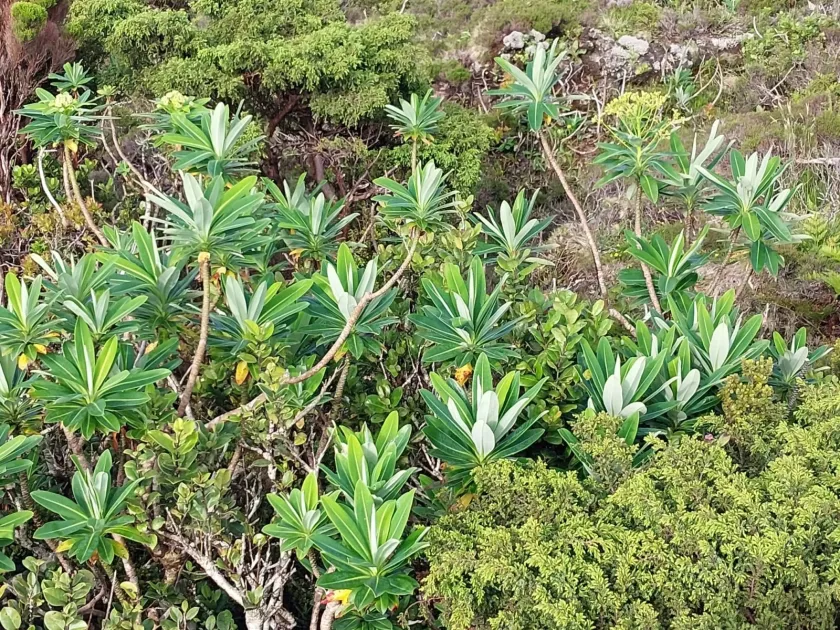
The Stygian Spurge (Euphorbia stygiana) is a rare evergreen shrub belonging to the Euphorbiaceae family. Originating from the Azores, this plant is naturally adapted to moist, subtropical forest environments with high levels of atmospheric humidity.
In cultivation, this species thrives in sheltered positions, avoiding extreme temperature fluctuations. As it is not frost-tolerant, it requires mild climatic conditions, making it suitable for greenhouses or sheltered coastal gardens where winters are temperate.
Soil requirements focus on excellent drainage and fertility. The plant prefers slightly acidic to neutral soil structures, which prevent the risk of waterlogging. Proper drainage is essential to mimic the volcanic soil conditions of its native habitat.
Light exposure should be bright but filtered. While mature plants can tolerate some sun, excessive direct exposure during midday can scorch the foliage, whereas insufficient light leads to sparse growth and loss of the characteristic dense shrub habit.
The economic value of this culture lies in its status as a collector's plant for botanical gardens and specialized nurseries. Its unique aesthetic form and limited availability make it a prized specimen for temperate-zone landscape design.
Main diseases and pests
The most significant threats to Euphorbia stygiana are fungal pathogens, specifically those causing root rot. These are primarily caused by overwatering or soil mixes that hold too much moisture, leading to systemic decay of the root system.
Spider mites represent a major pest risk, especially in dry, indoor, or greenhouse conditions. Frequent monitoring of the underside of leaves is necessary to detect early infestations before the insects cause significant damage to the plant tissue.
Mealybugs are another common pest that targets the Stygian Spurge. By feeding on the plant's sap, these insects weaken the growth cycle. Integrated pest management, including systemic insecticides or biological controls, is often required.
Poor ventilation within enclosed spaces promotes the spread of leaf spot diseases. Ensuring regular airflow helps maintain the leaf surface integrity and reduces the humidity levels that fungal spores prefer for colonization.
Like many plants in the Euphorbia genus, the sap is a milky, toxic latex. Handlers must exercise caution, using gloves and protective gear during pruning or transplanting to avoid dermatitis or irritation caused by contact with the plant's sap.