
Stillingia
Stillingia hybrids
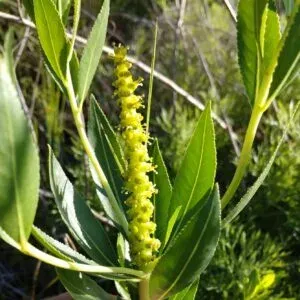
Description
Growing requirements
Stillingia (lat. Stillingia) belongs to the Euphorbiaceae family and consists of perennial herbaceous plants or shrubs. In agricultural practice, hybrids adapted for the industrial extraction of technical oils are of particular interest.
The plant prefers well-drained, fertile soils with a neutral or slightly acidic pH. For successful growth, a sunny site is essential, as the crop is heliophilic and performs poorly when shaded during the active growing season.
Climatic requirements include stable warm conditions with a long growing season. Stillingia hybrids are frost-sensitive, making cultivation viable only in regions with mild climates where temperature fluctuations are minimal.
Irrigation should be moderate but consistent during the flowering and seed-setting phases. While the crop exhibits some drought tolerance, moisture deficits during critical periods negatively impact seed oil content and overall yield.
Agronomy involves systematic inter-row cultivation to ensure adequate aeration of the root system. A crucial stage is the application of balanced fertilizers, particularly potassium-phosphorus complexes, which promote healthy fruit maturation.
Main diseases and pests
Stillingia is prone to fungal infections that thrive in high-humidity conditions. One of the primary threats is root rot, which occurs when water accumulates in the soil layers.
Pests frequently observed in plantations include sap-sucking insects, such as aphids and various species of spider mites. These pests not only hinder plant development but can also act as vectors for viral diseases.
Integrated pest management strategies, utilizing both biological agents and selective insecticides, are employed to control pest populations. Strict adherence to preventive measures, including high-quality pre-sowing seed treatment, is essential.
Powdery mildew is another significant disease that can affect foliage and young shoots. Timely thinning of rows and ensuring optimal air circulation significantly reduce the risk of large-scale disease outbreaks.
Monitoring crop health should be conducted weekly, especially during the pod formation period. Early detection of infection sites allows for effective mitigation and helps avoid the need for widespread chemical applications.