
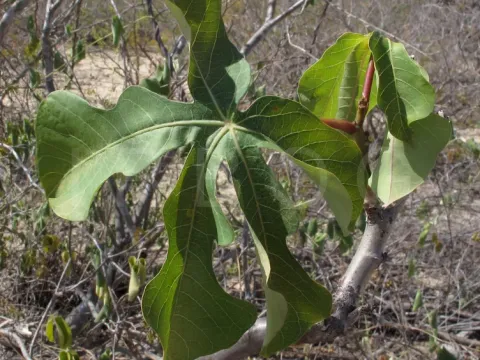
Manihot dichotoma
Manihot dichotoma
Manihot dichotoma, a member of the Euphorbiaceae family, is a distinct species native to the tropical forests of Brazil. Unlike its close relative, the food-crop cassava, this plant is primarily recognized for its rubber-producing capabilities.
What the section contains
Manihot dichotoma
The plant thrives in dry tropical climates, demonstrating a high tolerance for drought. It requires significant solar radiation and warm temperatures throughout the year to maximize the latex production in its woody stems.
Well-drained soil is a fundamental requirement for the healthy growth of this species. Waterlogging must be strictly avoided, as it significantly increases the risk of root pathogens and leads to the decline of the tree health.
Agrotechnical practices involve careful site selection to ensure sufficient spacing between individuals. Proper airflow is essential to prevent moisture accumulation and the subsequent development of fungal diseases on the canopy.
Soil nutrient management should focus on maintaining a balanced profile, although the species is notably robust and capable of surviving in relatively nutrient-poor soils compared to more demanding agricultural crops.
The primary economic output of Manihot dichotoma is latex, which is extracted via tapping the bark of mature trees. This process is highly specialized and requires precision to ensure the long-term productivity of the tree.
Latex yields are influenced by tree age, genetics, and site-specific environmental conditions. Mature trees, when managed under sustainable tapping cycles, provide a steady stream of raw material for the rubber industry.
Beyond the primary rubber product, the biomass of the tree can be evaluated for various secondary industrial applications. Research into these derivatives is ongoing, highlighting the potential for multi-purpose usage.
Sustainable harvesting protocols are mandatory to maintain the plant's health. Over-tapping can induce significant stress, leading to decreased latex flow and increased susceptibility to environmental stressors.
Productivity rates are generally competitive in arid tropical regions where other high-yield rubber species fail to thrive, making this plant an important component of local biodiversity-based agriculture.
Pest pressures primarily include leaf-eating insects that can defoliate the tree and reduce photosynthetic efficiency. Monitoring for early signs of infestation is crucial for maintaining a healthy plantation.
Fungal infections in the bark, particularly around tapping wounds, pose a severe threat. Strict sanitation of tapping tools is required to prevent the transmission of pathogens between individual trees.
Root rot remains a major concern in plantations with inadequate drainage. Maintaining optimal soil physical properties is the best preventative strategy against these common soil-borne threats.
Vascular diseases, often transmitted by insect vectors, can lead to the rapid decline of individual trees. Integrated pest management (IPM) practices are highly recommended to keep vector populations under control.
Quarantine measures and the use of resistant planting material help mitigate the risks associated with regional diseases, ensuring long-term plantation viability against evolving threats.