
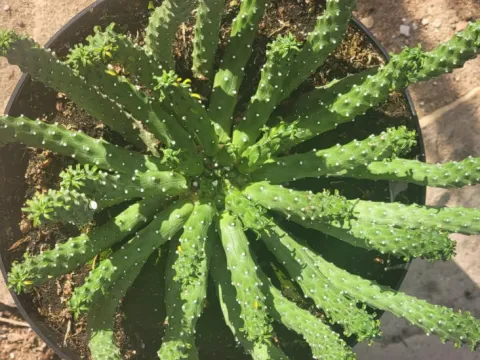
Hutton's Euphorbia
Euphorbia huttonae
Hutton's Euphorbia (Euphorbia huttonae) is a distinct succulent species belonging to the Euphorbiaceae family. It is native to specific arid regions in South Africa, where it has evolved to thrive in harsh, nutrient-poor conditions.
What the section contains
Hutton's Euphorbia
The cultivation of this species requires well-drained, gritty soil mixes that prevent waterlogging. Excessive moisture around the roots is the primary cause of failure in agricultural or nursery environments.
Environmental requirements include high light intensity, as the plant needs direct sunlight to maintain its structural integrity and natural coloration. Greenhouse cultivation is often necessary in non-native climates.
Temperature management is crucial, focusing on warm conditions during the active growing phase and cool, dry conditions during the winter dormancy period to mirror its native habitat cycles.
This culture serves primarily as a specialty ornamental plant. It is highly valued in botanical gardens and private collections for its architectural form and relative rarity in general trade.
The primary threats to Hutton's Euphorbia are fungal root and stem rots. These infections are almost always linked to poor substrate drainage or overly frequent watering schedules.
Common succulent pests, including mealybugs and spider mites, are frequent invaders. They tend to cluster in the protected areas of the plant, hindering its growth and aesthetic appeal.
Effective management requires the application of targeted insecticides or horticultural soaps during the early stages of infestation to prevent widespread damage to the succulent tissue.
Maintenance of optimal humidity levels and adequate airflow significantly reduces the susceptibility of the plant to common bacterial and fungal diseases.
As a member of the Euphorbia genus, it contains a milky sap that is toxic. Workers should always employ personal protective equipment, such as gloves and glasses, during propagation or maintenance.