
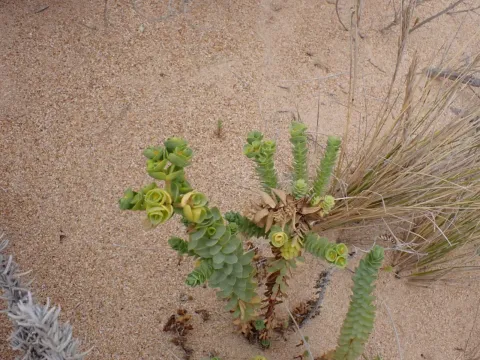
Sea spurge
Euphorbia paralias
Sea spurge is a hardy perennial member of the Euphorbiaceae family, specifically adapted to thrive in coastal sand dune environments. It is characterized by its glaucous foliage and distinct succulent stems that store water against coastal heat.
What the section contains
Sea spurge
Originating from the coastal regions of the Mediterranean and parts of the Atlantic, it has a widespread distribution. The plant is primarily found on foredunes, where it acts as a pioneer species in colonizing bare sand surfaces.
Regarding soil and climatic requirements, Sea spurge thrives in loose, sandy, and well-drained soils with high salinity. It requires full sun exposure and is highly tolerant to wind-blown salt spray and prolonged dry spells.
In terms of agricultural management, the plant is valued for its sand-binding capabilities rather than as a commercial crop. It naturally colonizes areas by dropping seeds into the sand, which remain viable even after exposure to seawater.
The plant has limited use in conventional farming but is highly important in ecological restoration projects. Its ability to stabilize shifting dunes makes it an invaluable component of coastal protection strategies.
Sea spurge is generally resistant to most common plant diseases. The primary concern is fungal root rot if the plant is grown in waterlogged soil with poor drainage, which is contrary to its natural habitat.
Insect pests include specialized aphids that target the succulent tissues. In some areas, invasive beetles can impact the plant's growth, though natural predation usually keeps these populations in check.