
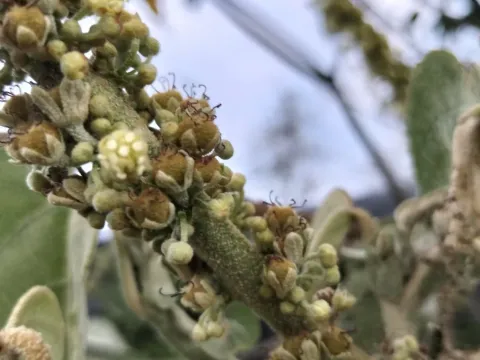
Dragon's blood croton
Croton draco
Dragon's blood croton (Croton draco) is a significant species within the Euphorbiaceae family. Native to the tropical regions of Central and South America, it is historically valued for its medicinal properties rather than timber production.
What the section contains
Dragon's blood croton
The plant thrives in tropical climates characterized by high humidity and consistent temperatures. It does not possess cold tolerance and requires protection from any freezing conditions to maintain active metabolic functions.
Soil requirements for Croton draco focus on excellent drainage and moderate nutrient availability. Deep, well-aerated soils are ideal for the development of its taproot system. Stagnant water can be detrimental, leading to severe root health issues.
Agrotechnical management involves regular fertilization with organic matter to support growth. Young plants require partial shade to avoid leaf scorch, while mature trees can withstand higher levels of sunlight if moisture levels are maintained.
The main commercial utility of this crop is the harvesting of its sap, known as "dragon's blood." This resinous substance is widely used in pharmaceuticals, skincare, and traditional healing for its potent anti-inflammatory and wound-healing properties.
The primary threats to Croton draco include various fungal pathogens that target the root system in poorly drained soils. Root rot can lead to rapid decline if the soil moisture balance is not carefully monitored.
Pests such as spider mites and scale insects are common in orchard settings. Implementing biological control methods and ensuring optimal air circulation around the canopy helps minimize the impact of these pests on crop health.
Resin harvesting is performed through careful tapping of the bark. By making superficial incisions, growers can collect the red sap that emerges without killing the tree, allowing for a sustainable harvest cycle.
The timing of harvest depends on the tree's physiological maturity. Once the tree is fully established, systematic tapping can continue for many years, providing a consistent supply of medicinal raw material for the industry.