
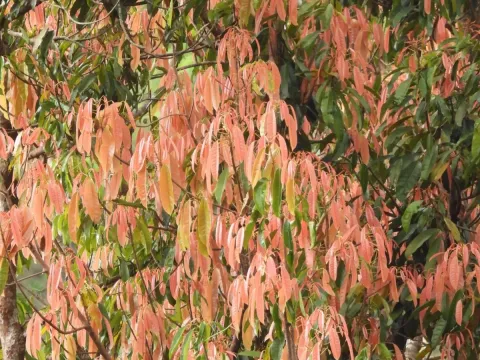
Elateriospermum
Elateriospermum
Propagation of Elateriospermum in its native habitat typically occurs naturally as mature fruit capsules explode to disperse seeds over a wide area.
What the section contains

Elateriospermum
In cultivation, seeds must be sown as soon as they are collected because they possess a very short shelf life and lose viability quickly under standard conditions.
The ideal planting time corresponds with the onset of the rainy season to ensure that young seedlings have sufficient moisture to establish a strong root system.
Germination requires a humid environment and warm temperatures, mirroring the natural conditions of the lowland tropical rainforests.
Seedlings should be kept in shaded nursery conditions during their early growth stages to protect them from direct sun exposure and rapid dehydration.
Elateriospermum, specifically Elateriospermum tapos, belongs to the Euphorbiaceae family and is native to the tropical forests of Southeast Asia.
The tree requires a tropical climate with high and stable temperatures throughout the year to support active growth and reproductive functions.
It prefers deep, well-drained alluvial soils that provide sufficient nutrient content while preventing waterlogging, which the root system cannot tolerate.
When establishing a plantation, providing adequate spacing is crucial to ensure good airflow and light penetration, which are necessary for the development of a healthy canopy.
High relative humidity is essential for the tree's health, particularly during the flowering and fruit-setting phases, as arid conditions can induce stress.
The primary agricultural value of Elateriospermum lies in its seeds, which are highly nutritious and contain significant amounts of high-quality vegetable oil.
Yield capacity is influenced by the tree's maturity and environmental consistency, with mature trees producing seasonal harvests of edible nuts.
Harvesting is labor-intensive because fruits ripen at different times and the height of mature trees makes manual collection difficult and time-consuming.
The oil extracted from the seeds is useful in various sectors, including local food traditions and potentially in the production of bio-based industrial lubricants.
Beyond seeds, the timber produced by these trees is valued in regional construction due to its durability and resistance to decay in tropical climates.
Common threats to these trees include various fungal pathogens that can affect root health if soil drainage is compromised by poor land management.
Insect pests that target foliage and young tender shoots can reduce the tree's overall vigor, especially in overly dense and poorly ventilated plantations.
Wildlife such as rodents and macaques often feed on the fruits before they are harvested, leading to substantial crop losses in plantation settings.
Improper fertilization strategies may disrupt the delicate balance of soil microbes that support tree development, leading to secondary health issues.
Preventative measures, including routine inspections and integrated pest management, are necessary to protect the productivity of these tropical plantations.
Harvesting involves the manual collection of fruits once they have matured and begun to turn brown, signaling that the inner seeds are fully formed.
Post-harvest processing requires separating the seeds from their husks immediately to prevent fungal growth caused by trapped moisture.
The seeds must be dried thoroughly under ventilated conditions to preserve the oil quality and extend the shelf life of the final agricultural product.
Storage facilities for the seeds should be clean, cool, and protected from vermin to maintain seed integrity before industrial or home processing occurs.
Oil extraction is usually performed through mechanical pressing, ensuring the final oil retains its characteristic properties and high market value.