
Dyer's croton
Chrozophora tinctoria
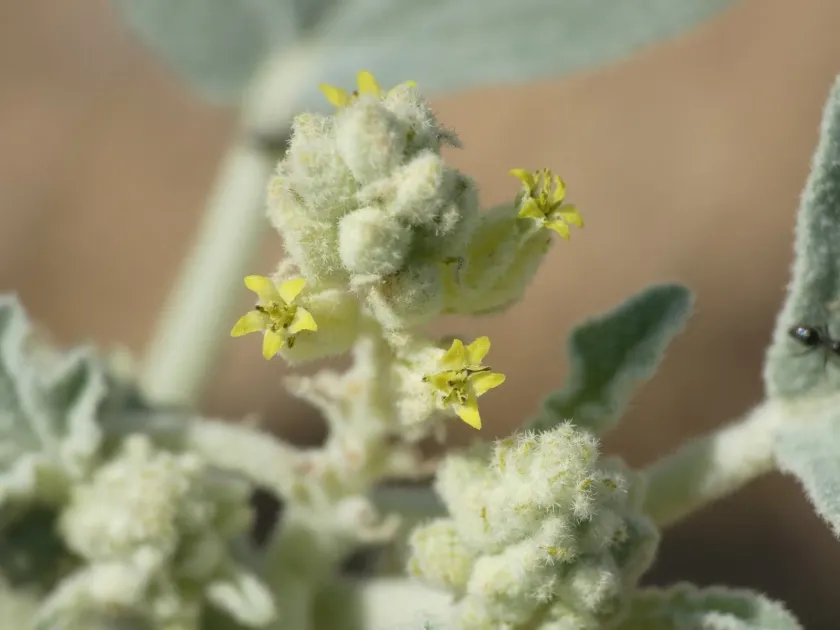
Description
Sowing dates
Sowing of Chrozophora tinctoria typically takes place in the spring season once the soil temperature consistently reaches 15 degrees Celsius.
The plant requires full sun exposure and well-drained soil, making site selection crucial for achieving uniform germination rates across the field.
Seeds are sown at a depth of approximately 2 to 3 centimeters, ensuring enough soil cover to maintain moisture during the initial phase of emergence.
Row spacing is generally maintained at 40-50 centimeters to allow for optimal plant development and effective weed management during the growth season.
Uniform stand establishment is important, as the crop is initially sensitive to competition from aggressive weeds, requiring timely inter-row cultivation.
Growing requirements
Dyer's croton belongs to the Euphorbiaceae family and is highly adapted to arid environments, showing excellent drought tolerance once established.
The crop performs best on light, sandy or loamy soils with a neutral pH, avoiding heavy clay soils that may hold excess moisture and promote decay.
Warm temperatures are essential throughout the vegetative growth period, as heat stimulates the accumulation of chemical pigments within the fruit.
Fertilization requirements are relatively low compared to commercial grain crops, as the plant is adapted to survive in nutrient-poor environments.
Proper airflow between plants is necessary to prevent the buildup of humidity, which can otherwise lead to fungal infections and stem weakness.
Yield
The economic value of this crop is primarily derived from the blue and purple pigments found in the plant's fruits, used as a traditional natural dye.
Yield potential is strongly correlated with the number of sunny days, as intensity of light directly affects the concentration of anthocyanins in the plant tissue.
Harvesting is usually done during the peak of flowering and initial fruit development when the pigmentation is most concentrated and stable.
Seed production serves as a secondary benefit, as the seeds contain technical-grade oils that can be extracted for various industrial applications.
Sustainable agricultural practices ensure consistent annual output and long-term soil productivity, essential for the viability of this specialty crop.
Main diseases and pests
Common pests include aphids and mites, which can cause significant damage to the foliage and affect the overall vitality of the crop during dry spells.
Fungal issues, such as powdery mildew, often arise in dense plantings where air circulation is restricted or during periods of unseasonable high humidity.
Root rot remains the most serious threat, typically resulting from poor drainage or over-irrigation in clay-heavy soil conditions.
Effective management strategies include crop rotation, use of certified seed, and diligent scouting to identify infestations at an early stage.
- Aphids
- Powdery mildew
- Root rot
- Spider mites
Harvesting
Harvesting is performed by selectively picking the fruit when it reaches the appropriate stage of maturity to ensure maximum dye yield.
The timing is critical, as delaying the harvest can lead to the degradation of pigments due to over-ripening or exposure to harsh weather conditions.
Once harvested, the material should be processed or dried immediately to prevent fermentation and the loss of essential chemical compounds.
Proper drying and storage in cool, dark, and well-ventilated areas help in preserving the quality of the raw material before further extraction.
Post-harvest waste management is simple, as the vegetative residue is generally non-toxic and can be incorporated back into the soil as organic matter.