
Southern highbush blueberry
hybrids between Vaccinium corymbosum L. and Vaccinium darrowii Camp
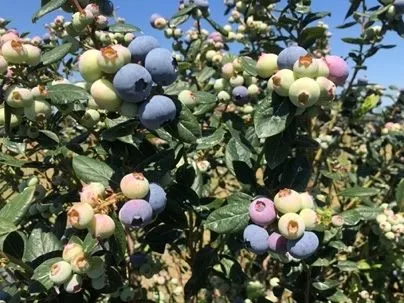
Description
Sowing dates
The southern highbush blueberry is an interspecific hybrid of Vaccinium corymbosum and Vaccinium darrowii, belonging to the Ericaceae family. This crop was specifically developed for regions with mild winters, where traditional northern highbush varieties fail to accumulate sufficient chilling hours.
Planting container-grown stock is recommended during early spring or autumn to ensure proper root establishment before facing extreme temperatures. It is crucial to prepare the planting site meticulously, as the development of the fibrous root system depends heavily on soil acidity.
The site selection should prioritize well-lit areas protected from strong, desiccating winds that can damage the foliage. Even with their southern adaptation, young plants often require shading during the first year's peak heat hours to prevent sunburn and root zone overheating.
Planting density varies based on row spacing, but for commercial production, a standard interval of 0.8 to 1.2 meters between plants is typically employed. Timely planting into prepared ridges or trenches enriched with organic matter provides an optimal start for the vegetation cycle.
The biological advantage of this group is the ability to maintain active growth at higher temperatures than northern counterparts. This makes the crop highly promising for farming in southern latitudes, where early harvest and resistance to winter thaws are essential market requirements.
Growing requirements
The primary requirement is a soil pH range between 4.0 and 5.2. Deviations from these levels cause the plant to struggle with nutrient uptake, leading to chlorosis and potential decline, making regular pH monitoring an essential task for any grower.
Soil must be light, loose, high in organic matter, and feature excellent drainage. Waterlogging in the root zone is fatal for blueberries, as it promotes root rot in these fine, hairless roots that lack the typical root hair structure of other crops.
The crop is highly sensitive to irrigation water quality; water with high carbonate content will rapidly raise soil pH. Utilizing acidification systems or fertigation is highly recommended to provide balanced nutrients and maintain the required acidic environment for consistent growth.
The thermal regime for southern varieties requires 200 to 600 chilling hours at temperatures below 7°C. This allows the plants to successfully complete their developmental cycle and prepare for vigorous blooming without suffering from premature bud break during winter warm spells.
Organic mulching of the root zone using pine sawdust, bark, or needles is a mandatory agricultural practice. The mulch retains soil moisture, suppresses weed competition, and contributes to stabilizing the required acidity levels in the upper soil layers.
Yield
The yield of southern highbush blueberries under optimal conditions ranges from 3 to 7 kilograms per mature bush. These figures depend heavily on cultivar characteristics, plant age, and the intensity of nutrient management conducted throughout the growing season.
The active fruiting period typically begins in the third or fourth year after planting, once the bush has developed sufficient vegetative mass. In commercial operations, plantations reach their peak productivity by the sixth to eighth year, ensuring long-term economic viability.
Fruits of this group are characterized by large size, firm skin, and excellent flavor profiles, which ensure high marketability and superior shelf life during transport. Varieties often feature early maturation, allowing growers to access fresh markets before northern competitors.
Maintaining stable yields requires annual sanitary and rejuvenation pruning. Removing branches older than five years stimulates the growth of new replacement shoots, where the majority of the current year’s crop is concentrated.
Yield potential is also influenced by pollination. Although many varieties are partially self-fruitful, the presence of multiple pollinator varieties in the planting significantly increases fruit set, individual berry size, and overall harvest quality.
Main diseases and pests
The most dangerous fungal diseases include anthracnose and mummy berry (Monilinia vaccinii-corymbosi). These can destroy a significant portion of the harvest under high humidity and warm conditions, necessitating timely preventative fungicide applications.
Phytophthora root rot is often triggered by poor irrigation management or inadequate drainage, making the root system vulnerable to soil-borne pathogens. Prevention relies on strictly controlling moisture levels and maintaining optimal soil structure.
Among pests, white grub larvae (May beetle) can cause severe damage by feeding on the roots of young plants. Protection is achieved through biological agents or specialized insecticides if pest pressure is detected in the soil environment.
Birds pose a serious threat during the berry ripening period. Using protective netting over the plantation is the only effective method to guarantee that the harvest is preserved from bird damage until it can be collected.
Mites, particularly the blueberry bud mite, can cause bud deformation and reduce bush productivity. Regular inspections of shoots in early spring and the use of acaricides when necessary are essential for controlling pest spread and ensuring plantation health.
Harvesting
Harvesting is performed in stages as berries ripen, because they do not continue to mature after being picked. Utilizing manual labor allows for selecting only the fully ripe berries, which is critical for achieving high-quality premium market standards.
The optimal time for harvest is early morning, when air temperatures are at their lowest and the fruit remains cool. This extends the product's shelf life and minimizes post-harvest losses during transport to the point of sale.
Southern highbush blueberries have a distinct waxy bloom, which protects them from moisture loss. It is crucial to handle the berries with care during harvest to avoid damaging this layer, thus preserving the fruit's visual appeal and flavor quality.
Immediate cooling at 0–2°C is recommended after harvesting. Rapid temperature reduction slows down fruit respiration and prevents fungal spore development, which is vital for maintaining the freshness required for the high-end retail market.
Harvesting containers should be shallow to prevent berries from being crushed under their own weight. Typically, plastic or wooden crates with ventilation holes are used to facilitate air circulation during both storage and transportation.