
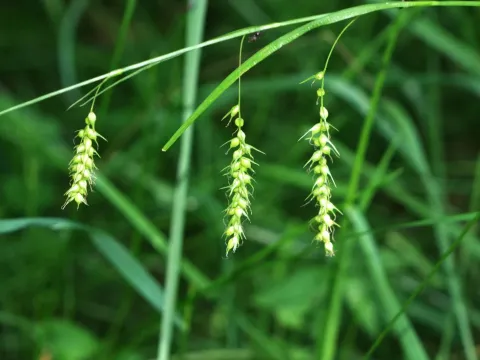
Arnell's sedge
Carex arnellii
Arnell's sedge (Carex arnellii) is a perennial herbaceous plant belonging to the Cyperaceae family. It is naturally adapted to moist habitats, including meadows, floodplains, and riparian zones, reflecting its high tolerance to waterlogged environments.
What the section contains
Arnell's sedge
The plant features a robust rhizomatous root system, which contributes to its perennial nature and ability to colonize soil effectively. Its structural characteristics make it a valuable component of ecosystems where soil stabilization is required.
Regarding soil requirements, this species thrives in fertile, well-drained but moist soils. It displays a preference for loamy textures that can retain moisture during the peak growing season, although it can adapt to various pH levels commonly found in wetland ecosystems.
In terms of climate, Arnell's sedge is highly winter-hardy and capable of enduring freezing temperatures. This resilience makes it suitable for cultivation in temperate climates, where it can withstand spring flooding and varying degrees of thermal fluctuation.
Agronomic management involves selecting sites with adequate light penetration and moisture availability. Proper land preparation is essential, as the establishment of a uniform stand ensures competitive dominance over unwanted weed species throughout the growing season.
The primary threats to the cultivation of Arnell's sedge include fungal diseases, such as leaf rusts and smuts, which often thrive in environments with high humidity and poor air circulation. Managing plant density is critical to mitigating these risks.
Pest pressures often arise from soil-dwelling insects, such as wireworms, which target the root system. Implementing integrated pest management (IPM) strategies, including crop rotation and soil tillage, is essential for maintaining healthy and productive stands.
Prevention is the most effective approach to disease management. This involves selecting disease-resistant germplasm and ensuring that cultural practices do not stress the plants, as stressed vegetation is more susceptible to opportunistic infections.
Monitoring for pest activity should occur periodically during the growing cycle. Early detection of symptoms allows for the precise application of protective measures, thereby protecting the plant stand from significant yield losses or structural damage.
Sustainable agricultural practices emphasize the use of biological control methods and appropriate fertilization. These practices ensure the long-term viability of the sedge field while maintaining the overall health of the local agroecosystem.