
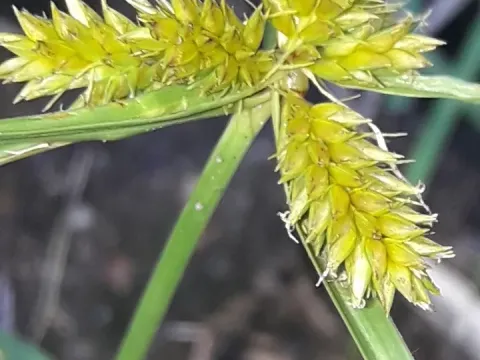
Aggregated nutsedge
Cyperus aggregatus
Aggregated nutsedge (Cyperus aggregatus) belongs to the sedge family (Cyperaceae). This perennial herbaceous plant is primarily found in the tropical and subtropical regions of the Americas.
What the section contains
Aggregated nutsedge
The plant prefers well-drained but sufficiently moist soils. It successfully adapts to various soil types, although it develops most actively in loamy soils with a neutral pH level.
For normal growth, the crop requires a high level of insolation. In shaded conditions, root system development slows down, which directly impacts plant biomass and its ability to reproduce vegetatively.
Optimal temperature ranges for active vegetation are between +20°C and +30°C. Aggregated nutsedge possesses moderate resistance to short drought periods but is sensitive to severe frosts that can damage the above-ground parts.
Agricultural management includes maintaining optimal soil moisture and regular weeding during the initial growth stages. Due to its ability to form dense clumps, the crop can suppress weed development after establishment.
The economic value of this species lies in its use as forage for livestock in its native regions. The nutritional value of the biomass is considered medium, but its high regeneration capacity ensures a stable yield of green mass throughout the season.
Yield depends on the intensity of nitrogen fertilizer application and the frequency of mowing. When moisture regimes are managed correctly, up to three full cuttings can be obtained during the growing season.
A biological characteristic of the species—the high concentration of nutrients in the rhizome—makes it promising for inclusion in pasture mixes. Its resistance to intensive grazing is an important advantage for this sedge species.
To increase hay yields, it is recommended to mow before the stems become overly coarse. This allows for the production of a high-quality product with an optimal fiber-to-protein ratio, suitable for silage or hay.
Future research is focused on exploring the potential of Cyperus aggregatus for the reclamation of degraded lands, where the plant demonstrates high viability in competitive environments.
Aggregated nutsedge is relatively resistant to most traditional crop pathogens. However, in cases of excessive soil waterlogging, fungal diseases such as root rot may occur.
Pests common to sedges include various insect herbivores. In some cases, crops may be damaged by larvae of meadow moths that feed on the succulent stems of the plant.
Disease prevention is based on crop rotation and the management of drainage systems. It is not recommended to plant this crop in areas with standing water, as this encourages the growth of pathogenic microflora.
Large-scale pest control is often unnecessary as the plant possesses sufficient natural immunity. When needed, biological control methods that exclude the use of harsh chemicals are applied.
It is important to monitor the purity of the planting material to avoid the introduction of specific pathogens that could reduce total pasture productivity and degrade the quality of the fodder produced.