
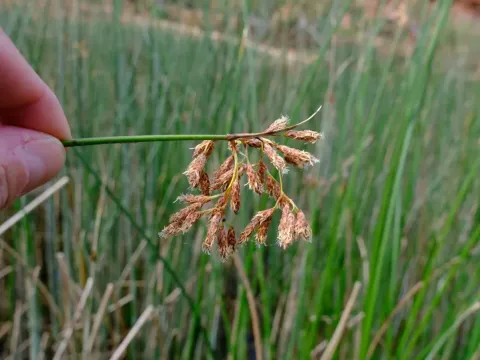
Awl-leaved clubrush
Schoenoplectus subulatus
Awl-leaved clubrush (Schoenoplectus subulatus) is a perennial herbaceous plant belonging to the Cyperaceae family. It naturally inhabits wetlands, shallow edges of freshwater bodies, and marshes, demonstrating high adaptation to aquatic environments.
What the section contains
Awl-leaved clubrush
The plant is characterized by a vigorous rhizome system and smooth, cylindrical stems that rise above the water surface. This structure allows the species to colonize shallow, muddy areas effectively and act as a pioneer species in wetland restoration projects.
To ensure healthy growth, this crop requires full sun exposure and constant moisture. It thrives in nutrient-rich organic soils or heavy silts where the water table is kept at a stable, high level throughout the primary growing season.
Agricultural management primarily focuses on water level control. While the species is resilient, managing the density of clusters is essential to prevent overgrowth in confined water features or man-made biological treatment ponds.
Economic and ecological applications include its use in phytoremediation for water quality improvement and decorative landscaping for water gardens. The stems are historically valued for their durability, serving as material for traditional crafts or thermal insulation in specialized construction.
The main biological threats include aphid infestations during the peak growing season, which can weaken the stems. Additionally, fungal pathogens like rust or stem rot can emerge if the water circulation is poor and the organic debris load in the pond becomes excessive.