
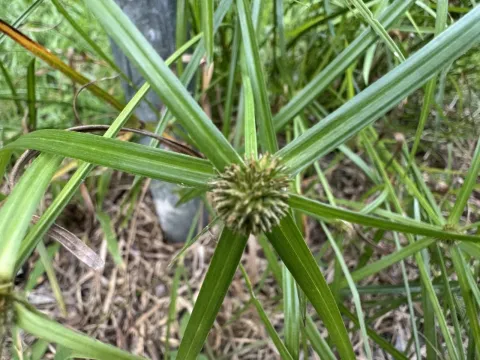
Aromatic flatsedge
Cyperus aromaticus
Sowing and propagation of Cyperus aromaticus for agricultural and decorative purposes are best performed in the spring when the soil is sufficiently warmed. The optimal time is late April or early May, once the risk of night frosts, which are detrimental to young shoots, has passed.
What the section contains
Aromatic flatsedge
Propagation is most commonly achieved through vegetative means, specifically by dividing rhizomes, which allows for faster biomass development. Rhizomes are planted in pre-prepared furrows at a depth of 5–7 centimeters to ensure stable rooting.
For seed propagation, surface sowing is necessary, as the tiny seeds require significant sunlight for successful germination. The soil should be lightly pressed after sowing and maintained at a moderate moisture level until the first sprouts appear.
Spacing between rows for large-scale cultivation should be at least 40–50 centimeters to ensure proper aeration and ease of maintenance. In dense plantings, the plant is prone to decay, making proper spacing a critical step in the agricultural process.
To ensure uniform emergence in industrial settings, seeds are subjected to stratification at low temperatures. This increases germination energy and promotes the formation of a robust root system during the early stages of vegetation.
Cyperus aromaticus is a tropical and subtropical perennial, making it highly demanding regarding air and soil humidity. The crop thrives best in areas with constant water supply, often preferring waterlogged or marshy terrains.
The plant has moderate soil requirements, favoring loose, organic-rich substrates with a neutral or slightly acidic pH. In heavy clay soils, the addition of sand and peat is required to improve drainage properties and oxygen access to the roots.
Light exposure plays a vital role in the plant's life cycle; it is photophilic and, under sunlight deficiency, loses leaf color vibrancy and aromatic intensity. Areas receiving direct sunlight in the first half of the day are preferred.
The temperature regime must be stable, avoiding sharp fluctuations. The optimal temperature range for active vegetative growth is +22...+28 degrees Celsius. Growth slows significantly if the temperature drops below +10 degrees Celsius.
The plant has low cold tolerance and cannot withstand soil freezing during winter. In temperate climates, it requires protection or relocation to heated greenhouses, which limits its widespread industrial cultivation in open fields.
The yield of aromatic flatsedge is estimated based on the volume of above-ground green mass, used for essential oil extraction or as decorative material. Under optimal conditions, the yield can reach 15–20 tons of green mass per hectare per season.
Maximum productivity is achieved in the second or third year, once the rhizome is fully formed and can support the active development of multiple stems. Regular nitrogen fertilization can increase biomass yield by 20–30 percent.
Harvesting is conducted in stages, allowing the crop to recover. With proper agronomic practices, up to two full cuttings of greens can be performed within a single growing season without significantly depleting the perennial rhizome.
An important factor affecting yield is the consistency of irrigation. Even short-term drought can reduce yields by nearly half, as the plant immediately responds to moisture deficiency by lowering photosynthetic intensity.
After each cutting, soil loosening and the application of complex micro-fertilizers are mandatory to stimulate new shoot growth. This approach ensures stable yields over several years on the same plot of land.
Cyperus aromaticus is relatively resistant to specific pathogens, but in cases of excessive water stagnation, it may be affected by fungal diseases such as root rot and fusarium. This manifests as yellowing of the stems and rapid death of the vegetative part.
Among pests, sucking insects such as spider mites and aphids pose the greatest threat, as they reproduce actively during dry periods. They damage young leaves by sucking sap, which suppresses the plant's overall health.
To combat fungal infections, preventive treatments with copper-based fungicides are used. A key agronomic practice is maintaining crop rotation and preventing the compaction of the topsoil layer.
In the event of mass pest infestation, it is recommended to use biological insecticides, which are environmentally safe. Chemical agents are applied only in cases of severe infestation, while strictly observing the waiting period before harvest.
Disease prevention involves keeping the plot free of weeds, which can act as intermediate hosts for many types of pests. Regular weeding and sanitary pruning of diseased shoots significantly reduce the infection pressure on the crop.
Harvesting begins during the phase of maximum accumulation of useful compounds, typically occurring just before or at the very beginning of flowering. At this moment, the concentration of essential oils in the leaves and roots reaches its peak.
Stems are cut with sharp tools at a height of 5–10 centimeters from the ground. Mechanical mowers can be used on large areas, provided that the blades do not damage the plant's root crown.
After harvesting, the raw material undergoes immediate primary processing: drying in shaded, well-ventilated rooms or specialized dryers. Maintaining the temperature regime during drying (not exceeding +40 degrees Celsius) preserves the aroma and beneficial properties.
Rhizomes, if intended for processing or storage, are dug up in autumn, cleaned of soil residues, washed with running water, and cut into fragments. They are also dried to a moisture content of no more than 12–14 percent to prevent spoilage during storage.
Finished raw materials are stored in paper or cloth bags in dry, dark places. Adherence to storage conditions ensures the preservation of the product's quality and essential properties throughout the winter period until the next processing cycle.