
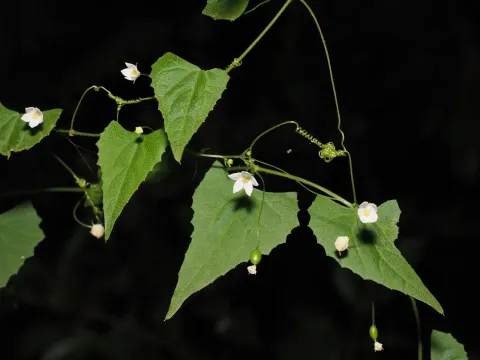
Zehneria
Zehneria
Sowing Zehneria in temperate climates is primarily performed using the seedling method. Seeds are sown in a nutrient-rich substrate 4–6 weeks before the end of the last frost, ensuring a stable germination temperature of about 22–25 degrees Celsius.
What the section contains
 Zehneria baueriana
Zehneria capillacea
Zehneria capillacea
Zehneria baueriana
Zehneria baueriana
Zehneria capillacea
Zehneria capillacea
 Zehneria emirnensis
Zehneria gillettii
Zehneria gillettii
Zehneria emirnensis
Zehneria emirnensis
Zehneria gillettii
Zehneria gillettii
 Zehneria guamensis
Zehneria hallii
Zehneria hallii
Zehneria guamensis
Zehneria guamensis
Zehneria hallii
Zehneria hallii
 Zehneria japonica
Zehneria japonica
Zehneria japonica
 Zehneria maysorensis
Zehneria maysorensis
Zehneria maysorensis
 Zehneria minutiflora
Zehneria mucronata
Zehneria mucronata
Zehneria minutiflora
Zehneria minutiflora
Zehneria mucronata
Zehneria mucronata
 Zehneria odorata
Zehneria odorata
Zehneria odorata
 Zehneria scabra
Zehneria scabra
Zehneria scabra
 Zehneria thwaitesii
Zehneria wallichii
Zehneria wallichii
Zehneria thwaitesii
Zehneria thwaitesii
Zehneria wallichii
Zehneria wallichii
Zehneria
In tropical and subtropical conditions, where the plant feels most comfortable, seeds are sown directly into the soil at the beginning of the rainy season. It is crucial to prepare the soil beforehand by incorporating organic fertilizers to ensure a vigorous start to the vegetative stage.
To ensure uniform emergence, it is recommended to soak the seeds in warm water for several hours prior to sowing. The seeds should be planted at a depth of 1.5 to 2 centimeters, which allows the sprout to successfully emerge through the soil layer.
After the first true leaves appear, seedlings are pricked out into individual containers to avoid damaging the delicate root system. Transplanting to the final location should only occur once the soil has warmed up sufficiently.
The spacing between plants should be at least 50–70 centimeters, as Zehneria is a vigorous, fast-growing vine that requires ample space for proper air circulation and vertical growth.
Zehneria belongs to the Cucurbitaceae family and is a perennial or annual vine native to the tropical regions of Africa and Asia. For successful growth, the crop requires high air humidity and protection from sharp temperature fluctuations.
Optimal soil conditions consist of loose, fertile loams with a neutral or slightly acidic pH level. The plant is extremely sensitive to waterlogging, making the presence of high-quality drainage a critical factor in preventing root rot.
This crop is light-loving but prefers light shading during the peak afternoon hours in extremely hot climates. For vertical growth and full fruit production, the plant must be provided with support systems such as trellises or netting.
Irrigation must be regular but moderate, focusing on maintaining soil moisture without causing swampy conditions. During the peak flowering period, water demand increases, necessitating adjustments to the irrigation schedule.
Mineral fertilization is applied incrementally throughout the growing season, utilizing balanced complex fertilizers with higher levels of potassium and phosphorus. This promotes the formation of high-quality fruit, which holds specific ethnobotanical value.
The yield of Zehneria depends directly on the quality of maintenance and the climatic conditions of the growing region. In favorable tropical environments, the vine can produce fruit almost continuously over a long period.
Zehneria fruits are typically small, resembling miniature cucumbers, and often feature speckled patterns when ripe. Despite their size, the high density of fruit set per plant allows for a significant volume of production.
In greenhouse settings, yield can be significantly increased through manual pollination, especially if natural pollinating insects are absent within the structure.
For commercial purposes, harvesting is performed as fruits reach technical maturity, as overripe fruits lose their flavor and texture, becoming excessively soft.
Regular harvesting stimulates the plant to form new fruit sets, which is the primary technique used to prolong the productive period and increase the total yield per unit of area.
The most dangerous pests for Zehneria are spider mites and melon aphids, which thrive in conditions of high heat and dry air. Damage to the leaves by these insects can significantly reduce the photosynthetic activity of the plant.
Fungal diseases, such as powdery mildew and anthracnose, pose a serious threat if humidity levels are not managed correctly. Prevention involves following agricultural best practices and ensuring good airflow between the vines.
Root rots caused by pathogenic microorganisms in waterlogged soil can lead to the rapid demise of the plant. Control is difficult, making preventive fungicide treatment during early stages highly important.
Nematodes, which attack the root system, can also cause significant damage in certain regions. The use of healthy planting material and strict crop rotation are essential elements of pest management.
Systematic monitoring of leaves and stems allows for the timely detection of initial infection sites. The use of eco-friendly biological products helps effectively suppress pest populations without the risk of toxin accumulation in the harvest.
Harvesting Zehneria requires care, as the stems of the vine are quite fragile and easily damaged by rough handling. Fruits should be removed along with the stalk using a sharp garden pruner or knife.
It is important to harvest during the morning hours, when the fruits are fully hydrated and have their highest density. This ensures a longer shelf life and better marketability after transport.
Sorting should take place immediately after harvesting: deformed or damaged specimens are separated, as they are not suitable for long-term storage and must be consumed immediately.
Freshly harvested produce is best stored in a cool, well-ventilated room or in a refrigerator at about 8–10 degrees Celsius, which slows down the aging processes of the fruit tissues.
For long-term preservation, Zehneria is sometimes processed through pickling or drying, allowing the nutritional properties of the crop to be utilized outside the active harvest season.