
Zehneria scabra
Zehneria scabra
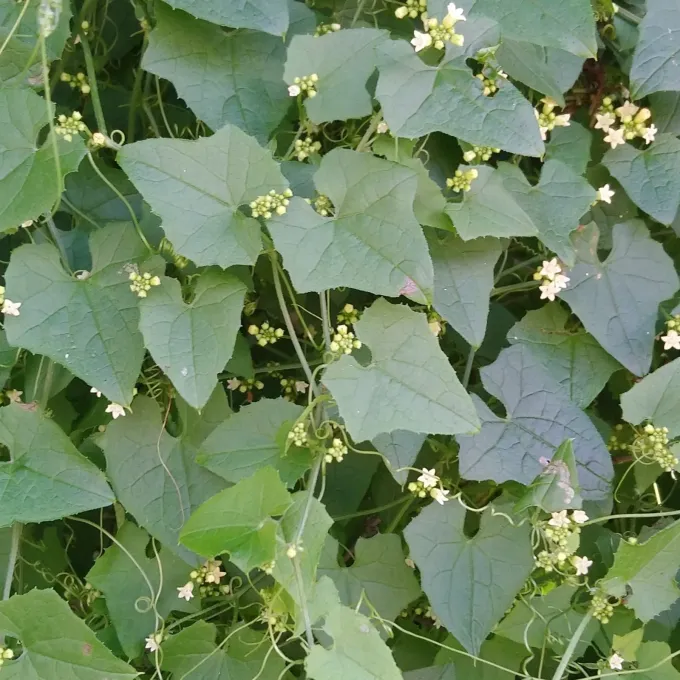
Description
Growing requirements
Zehneria scabra is a perennial climbing plant belonging to the Cucurbitaceae family. It is widely distributed across tropical Africa and parts of Asia, thriving in diverse habitats ranging from forest margins to open bushlands.
This crop requires warm climates and does not tolerate frost, making it ideal for tropical greenhouse production or outdoor cultivation in frost-free regions. It performs best in nutrient-rich, well-draining soils with consistent moisture availability.
Botanically, it features rough-textured foliage and produces small, berry-like fruits that are characteristic of its family. The plant uses specialized tendrils to climb, making it an excellent candidate for vertical farming systems or trellis-based cultivation.
For optimal growth, Zehneria scabra needs full sun to partial shade exposure. It is highly responsive to organic amendments in the soil, which promote the rapid expansion of its vegetative mass during the active growing season.
Economic importance of this plant lies primarily in its medicinal properties. Various traditional practices utilize its roots and leaves for managing digestive issues and inflammation, driving interest in its potential as a specialized botanical crop.
Main diseases and pests
Powdery mildew represents a major threat to the health of Zehneria scabra, especially in conditions of high humidity and limited airflow. Proper spacing between plants is essential to manage this risk effectively.
Spider mites and aphids are the most common pests that infest this crop. These insects primarily attack the underside of the leaves, necessitating frequent monitoring and targeted intervention when threshold levels are reached.
Root rot, induced by waterlogged conditions, can cause severe damage or total plant loss. Ensuring that the soil structure provides adequate drainage is a fundamental agricultural requirement for this species.
Viral infections can significantly reduce yields by stunting plant growth and affecting fruit development. Since viruses are often transmitted by insects, rigorous pest management is the primary strategy for prevention.
Farmers should implement a cleaning protocol for all trellising equipment after each harvest season to ensure that pathogens do not survive in the substrate or structural materials, thus protecting future cycles.