
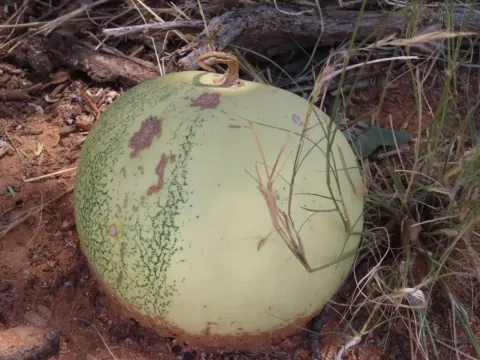
Watermelon
Citrullus
Watermelon (Citrullus) is a member of the Cucurbitaceae family. Sowing in open fields should only begin when the soil temperature at a depth of 10 cm remains consistently above +14...+16°C, ensuring optimal germination rates.
What the section contains


Watermelon
In regions with shorter growing seasons, starting plants as transplants is recommended. Seedlings are typically transplanted at 30–35 days old, with 3–4 true leaves developed, which helps ensure the crop reaches maturity before autumn frosts.
Planting density varies based on variety and irrigation method, typically ranging from 6,000 to 10,000 plants per hectare. Wide row spacing of 1.4 to 2.1 meters allows for adequate vine spread and efficient field management.
Crop rotation is vital to prevent soil-borne diseases. Watermelons should not follow other cucurbits like pumpkins or cucumbers; ideal predecessors include winter grains or legumes, which help maintain soil health.
Correct field preparation involves deep tillage and the incorporation of organic matter to provide a nutrient-rich foundation for the crop's extensive root system.
Watermelons require a long, hot growing season with accumulated heat units exceeding 2,500°C. They thrive in temperature ranges between +25°C and +30°C, and growth halts significantly if temperatures dip below +15°C.
Full sun exposure is non-negotiable for high-quality production. Any shading will drastically reduce the sugar content and fruit weight, directly impacting the marketability of the final harvest.
The ideal soil is a light, well-draining sandy loam with a neutral to slightly alkaline pH. These soils warm up quickly in the spring, which is critical for the early development of the taproot.
Consistent moisture is essential during the flowering and fruit-setting stages. While watermelons are drought-tolerant, water stress during these critical phases can lead to fruit abortion or stunted growth.
Fertilization should be managed via a split application method. Focus on nitrogen early in the vegetative cycle, transitioning to high potassium and phosphorus levels as the fruit begins to swell to ensure quality.
Standard yields under dry-land conditions average 15–25 tons per hectare. However, implementation of modern intensive farming techniques, such as plastic mulching and drip irrigation, can boost yields to 50–80+ tons per hectare.
The use of F1 hybrid seeds is standard practice in commercial operations. These varieties offer superior uniformity in size, shape, and ripening, which simplifies harvest logistics and increases market appeal.
Effective management of fruit load per plant is a strategic decision. Commercial growers may limit the number of fruits per vine to achieve larger individual weights, catering to premium market segments.
Yield stability is heavily influenced by the ability to manage localized environmental stressors and the timely application of nutrient boosters during the period of maximum fruit expansion.
Post-harvest losses are a significant factor in total yield calculation. Protecting the fruit from mechanical damage and ensuring rapid cooling after harvest are essential for maximizing the marketable crop volume.
Fusarium wilt and anthracnose are among the most destructive pathogens for watermelons. They thrive in warm, humid conditions and can destroy entire fields if not managed through rigorous crop rotation and fungicide application.
Powdery mildew appears as a white, dusty layer on the foliage, significantly reducing photosynthetic capability. Early detection and treatment with systemic fungicides are required to prevent widespread infection.
Aphids and spider mites are the most common pests. These insects colonize the undersides of leaves, causing structural damage and serving as vectors for various plant viruses that severely limit productivity.
An integrated pest management (IPM) approach is recommended, combining cultural practices, biological controls, and chemical interventions only when action thresholds are exceeded.
- Strict crop rotation schedules
- Use of disease-resistant hybrids
- Regular monitoring for pest populations
- Proper sanitation of field equipment
Harvesting is an art as much as a science, relying on indicators such as the drying of the tendril near the stem, a dulling of the fruit's surface, and the yellowing of the ground spot.
The "thump test" is a traditional method, where a dull, hollow sound indicates maturity. Additionally, the fruit should exhibit a slight audible crunch when pressed, signaling it is fully ripe.
Fruits must be cut from the vine rather than pulled to ensure the stem remains intact. Leaving a 3–5 cm piece of the stem helps seal the fruit and prevents post-harvest decay during transit.
Avoid leaving harvested fruits in direct sunlight. Rapid transport to a cool, shaded storage area is necessary to prevent the internal pulp from becoming mushy and losing its crisp, refreshing texture.
Temperature control post-harvest is crucial. Storing watermelons between +8°C and +12°C with adequate ventilation can extend their shelf life and maintain high internal quality for several weeks.