
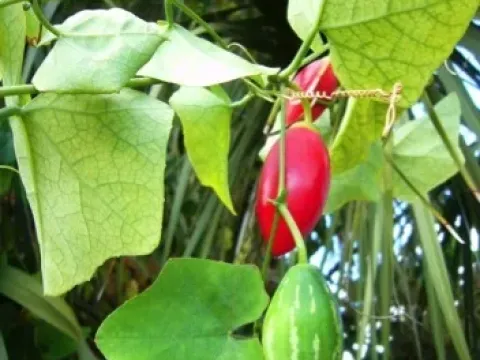
Coccinia trilobata
Coccinia trilobata
Coccinia trilobata is a perennial climbing plant belonging to the Cucurbitaceae family. Originating from the tropical regions of Africa and Asia, it is known for its vigorous vine growth and adaptability to warm, humid environments.
What the section contains
Coccinia trilobata
The crop thrives in full sunlight and requires consistently warm temperatures, ideally between 22 and 30 degrees Celsius. It is highly intolerant of frost, which makes it suitable primarily for tropical and subtropical cultivation zones.
Cultivation requires fertile, well-draining, and loose soil. The optimal pH levels are neutral to slightly acidic. Incorporating organic matter during soil preparation is essential to support the high nutrient demands of the rapidly growing plant.
Agrotechnical requirements include the installation of robust trellises or supports. Proper spacing is necessary to facilitate airflow, which prevents excess humidity within the canopy and supports uniform fruit development.
The plant is utilized for its edible shoots, leaves, and fruits, which are highly valued in local diets for their nutritional density. It is often cultivated as a perennial vegetable in home gardens and small-scale commercial farms.
Fungal diseases, particularly powdery mildew, are the primary health risks during periods of high humidity. Regular inspection and the removal of infected foliage are vital for maintaining the health of the crop throughout the season.
Insects such as aphids, mites, and various leaf-miners often target the young leaves of the plant. Integrated pest management strategies, including the use of neem-based solutions or targeted biological controls, are recommended for sustainable production.