
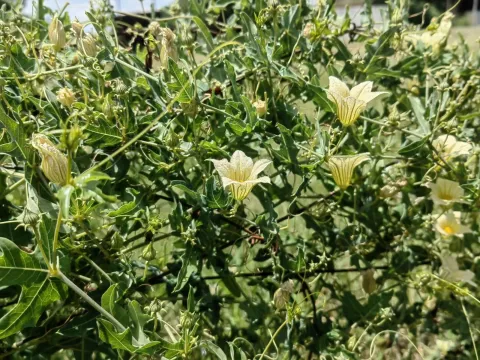
Coccinia sessilifolia
Coccinia sessilifolia
Coccinia sessilifolia is a perennial herbaceous climber belonging to the Cucurbitaceae family. It originates from a tuberous root system, which allows the plant to survive in harsh, arid environments. Sowing typically coincides with the beginning of the rainy season to optimize seed germination.
What the section contains
Coccinia sessilifolia
The seeds require well-drained, sandy, or rocky soil, mimicking the natural conditions of the southern African savannas. A planting depth of 1–2 cm is recommended to ensure the emerging root system is protected while having enough resources to establish itself.
Commercial or home cultivation requires careful attention to soil moisture. Since the plant is highly susceptible to waterlogging, it is best grown in containers with high drainage capacity or on raised mounds in open fields.
Early growth stages are characterized by a focus on developing the subterranean tuber. Consequently, the aerial growth might seem slow initially, which is a normal biological trait of this species as it builds its energy reserves.
As the plant develops, it needs sturdy vertical supports. Using its tendrils, the vine climbs efficiently, maximizing light exposure and airflow throughout the foliage, which is essential for healthy maturation.
Native to dry regions such as Botswana and Namibia, this species is exceptionally drought-tolerant. It thrives in high-sunlight conditions and is perfectly adapted to the extreme heat of semi-desert landscapes.
The ideal soil is poor in organic matter but possesses excellent permeability. Water stagnation in the root zone is the primary cause of plant failure, leading to rapid rot of the tuberous organs.
Temperatures ranging from +22 to +30 degrees Celsius are optimal for the plant's metabolic processes. It possesses specific adaptations that allow it to remain dormant or slow its activity during prolonged dry spells.
Full sun is a mandatory requirement for this species. In shaded conditions, the vine becomes spindly, and the overall reproductive capacity decreases, leading to lower fruit production and weakened immunity.
Proper air circulation is crucial to prevent the onset of fungal issues. Keeping the vines spaced out prevents micro-climates of high humidity from forming around the leaves, which could otherwise invite pathogens.
The хозяйственное use of Coccinia sessilifolia centers on its fruit and young shoots, which are utilized as food. Yield is heavily dependent on the age of the plant and the intensity of solar radiation during the ripening phase.
The fruits, which resemble small cucumbers, are highly valued in local diets for their nutrients. Harvesting should be performed when the fruits reach their technical maturity to ensure the best flavor and texture.
Young leaves and stem tips can also be consumed as wild greens. These parts are rich in essential nutrients, acting as an important food source during seasons when other crops might be scarce.
Harvesting should be done selectively, picking mature fruits throughout the season. Proper timing prevents the fruit from becoming overripe, which would otherwise attract insects and potentially degrade the fruit quality.
Overall productivity varies based on the size of the root tuber. A mature, well-established plant can provide a consistent supply of fruits throughout the active growing season, provided basic environmental needs are met.
The most significant threat to this crop is root rot, which occurs if soil drainage is compromised. Once the tuber begins to decay due to excess moisture, the plant's recovery is rarely successful.
Spider mites are common pests in hot and arid conditions, attacking the leaves and causing them to turn yellow. Regular inspections and mild acaricidal treatments are effective in controlling their population.
Aphids may infest young shoots, drawing sap and weakening the vine. Early detection is key, and simple mechanical removal or organic insecticidal soap is usually sufficient to manage these infestations.
Powdery mildew can become a problem in cases of poor airflow or irregular humidity. Ensuring the plants are not overcrowded is the best preventative strategy against this fungal disease.
In some agricultural systems, nematodes can damage the root system. To prevent this, it is essential to use pathogen-free planting material and implement crop rotation strategies on a long-term basis.