
Dactyladenia dinklagei
Dactyladenia dinklagei
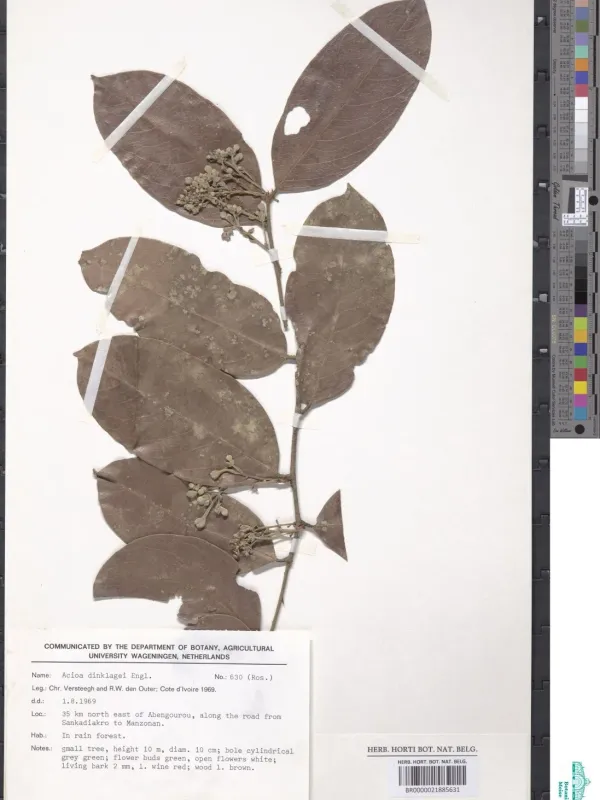
Description
Growing requirements
Dactyladenia dinklagei is a perennial woody plant belonging to the Chrysobalanaceae family. It is native to the tropical forests of West Africa, where it plays a significant role in the local forest ecosystem structure.
The culture thrives in hot, humid tropical climates characterized by high and consistent annual temperatures. It is highly sensitive to frost and extreme cold, necessitating a stable tropical environment for successful establishment.
Soil requirements involve well-drained, nutrient-rich substrates. The species prefers deep forest soils where moisture is retained but waterlogging does not occur, as root health is paramount for the long-term vitality of the trees.
Botanically, it often grows as an understory tree, showing strong shade tolerance during its juvenile stages. As the tree matures, it can become a prominent part of the forest canopy, adapting to higher light intensities.
Agronomic management requires consistent monitoring, especially during the first few years of growth. Weed control is essential to ensure that the seedlings are not overshadowed by faster-growing pioneer species in the area.
Harvesting
Economically, the primary use of Dactyladenia dinklagei is its high-quality, durable timber. It is highly valued in local construction and for the production of heavy-duty tools due to the density of the wood.
The species also holds potential in agroforestry systems, where it can contribute to soil stabilization and water retention. Its deep root system aids in erosion control on fragile tropical landscape surfaces.
Harvesting techniques should focus on sustainability. Selective logging practices are recommended to maintain the forest cover and prevent the degradation of the site, allowing for natural regeneration of the species.
While the wood is the primary economic asset, research into other biological properties of the plant is ongoing. Utilizing various biomass fractions can increase the overall efficiency of forestry operations.
Long-term plantation management is required due to the slow maturation rate of the trees. Planning for harvest must account for the decadal growth cycles necessary to achieve optimal timber size and quality.