
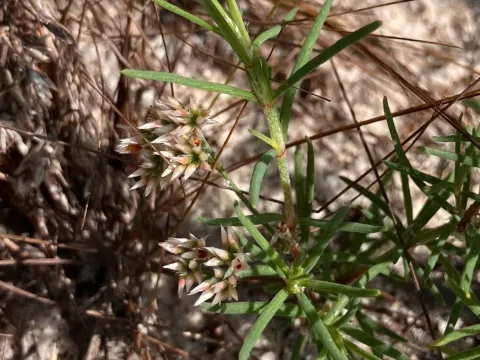
Polycarpaea corymbosa
Polycarpaea corymbosa
Polycarpaea corymbosa, a member of the Caryophyllaceae family, is a herbaceous plant that thrives in tropical and subtropical climates. Sowing should be timed to coincide with the beginning of the warm season when soil temperatures are consistently high.
What the section contains
Polycarpaea corymbosa
For optimal results, seeds should be sown on the surface of well-prepared, loose soil. Since the seeds are extremely small, they require careful handling and minimal coverage to ensure they receive sufficient light for germination.
Adequate spacing is crucial to prevent seedling competition. In a controlled agricultural setting, rows should be spaced to allow for proper airflow and sunlight penetration to all parts of the plant.
Germination typically occurs within a week or two, provided the soil moisture is maintained at a steady, moderate level. It is vital to avoid surface crusting, which can hinder the emergence of delicate seedlings.
Early-stage management involves protecting the seedlings from heavy rains or mechanical damage, as the plant structure is initially quite fragile before establishing a robust root system.
This species is highly adapted to sandy and well-drained soils. It exhibits excellent tolerance to nutrient-poor soils, making it an efficient crop for sustainable agricultural practices in marginal areas.
Water management is the most critical aspect of its cultivation. While it is drought-tolerant, it will not survive in waterlogged soil conditions. Irrigation must be precise and strictly monitored.
The plant requires full sun exposure to flourish. Reduced light conditions will result in etiolated stems and a significantly lower concentration of secondary metabolites, which are essential for its medicinal value.
Temperature range is another key factor; the plant prefers warm conditions, ideally between 22 and 30 degrees Celsius. It is sensitive to frost and should be cultivated in frost-free regions or seasons.
Soil pH should remain in the neutral to slightly acidic range. High alkalinity should be avoided, as it may limit the availability of necessary micronutrients and lead to leaf yellowing.
The economic value of Polycarpaea corymbosa is derived primarily from its aerial parts. The yield is measured by the volume of dry matter harvested at the peak of the flowering stage.
Harvesting is typically done manually or with light machinery by cutting the plants slightly above the ground. Harvesting during the morning hours, after dew has evaporated, is recommended to preserve quality.
The plant demonstrates a strong regenerative capacity. With proper care and irrigation after the first cut, multiple harvests per season may be possible in tropical zones.
Post-harvest processing is essential for maintaining product integrity. Drying should be conducted in shaded, airy environments to prevent the degradation of active chemical constituents by sunlight.
Efficient storage after drying is required to prevent moisture absorption, which could lead to mold development and loss of the final product's quality.
Polycarpaea corymbosa has natural defenses against many common pests. However, it is not immune to agricultural challenges, especially when grown under improper conditions.
Root rot caused by fungal pathogens is the most frequent issue. This is almost exclusively associated with poor drainage or excessive irrigation practices that saturate the root zone.
Powdery mildew may appear on the foliage if air circulation is insufficient or if humidity levels remain too high for extended periods, necessitating the thinning of the crop.
Invasive weed species pose a significant threat during the early development phases. Weed management must be diligent to ensure that the crops are not smothered before they reach maturity.
Using integrated pest management strategies is encouraged to maintain the purity of the crop, avoiding chemical residues that could compromise its herbal applications.