
Moehringia dielsiana
Moehringia dielsiana
Description
Growing requirements
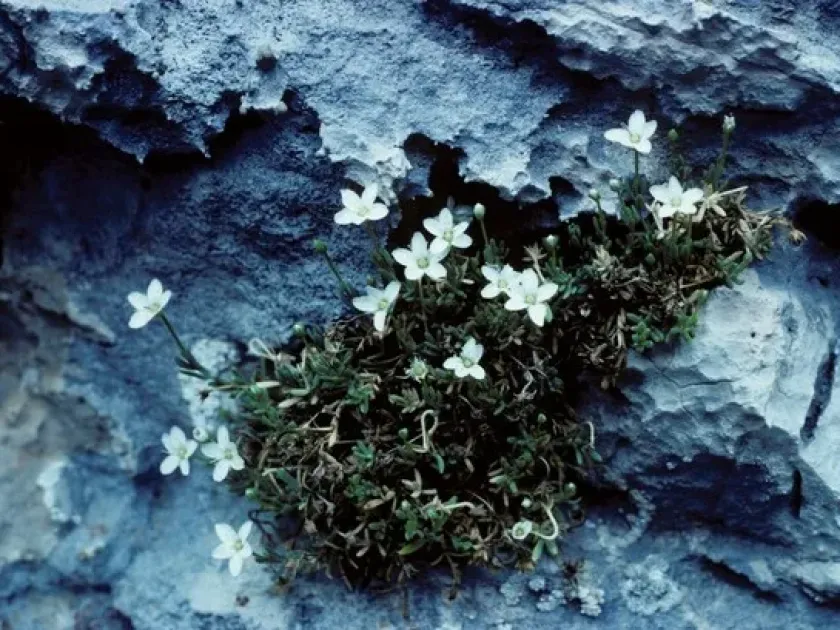
Moehringia dielsiana is a perennial herbaceous plant belonging to the Caryophyllaceae family. It is primarily found in high-altitude environments, where it specializes in colonizing rocky cliffs and scree slopes that offer minimal resources.
The plant demonstrates unique botanical adaptations to survive in extreme habitats. Its compact growth form, known as a cushion habit, allows it to trap moisture and resist the desiccating effects of high-altitude winds and intense solar radiation.
Regarding climatic requirements, the species thrives in regions characterized by harsh, long winters and short, cool growing seasons. It relies on a consistent snow cover during winter to protect its tissues from extreme frost damage.
The substrate preference is strictly limited to well-drained, nutrient-poor, and alkaline soils. The plants possess specialized root systems capable of extracting minerals directly from the crevices of carbonate-rich rock formations.
A high level of light intensity is essential for the species' health. It is fundamentally an obligate heliophyte, meaning it will show signs of etiolation and declining vigor if exposed to even moderate levels of shade or forest canopy encroachment.
Main diseases and pests
The primary threats to Moehringia dielsiana are environmental degradation and the impact of human activities on sensitive alpine ecosystems. Any disturbance to the rock face structure directly destroys the habitat necessary for its survival.
Fungal diseases primarily occur in artificial cultivation environments where air circulation is restricted. In its natural habitat, the windy conditions prevent the buildup of moisture that would otherwise encourage the development of rot pathogens.
Pests are generally limited to small alpine insects that feed on the succulent leaves. However, these interactions are usually balanced by the slow growth rate of the plant and the inhospitable climate that keeps pest populations at low levels.
Climate change poses a long-term danger by shifting the precipitation patterns and temperature regimes of its native habitat. Unpredictable weather shifts can trigger premature blooming, making the plant susceptible to subsequent freeze damage.
Conservation efforts are vital to protect the species from overcollection and site disruption. Because it occupies a highly specialized ecological niche, it has a very low ability to recover from site-specific stressors compared to common flora.