
Moehringia sedoides
Moehringia sedoides
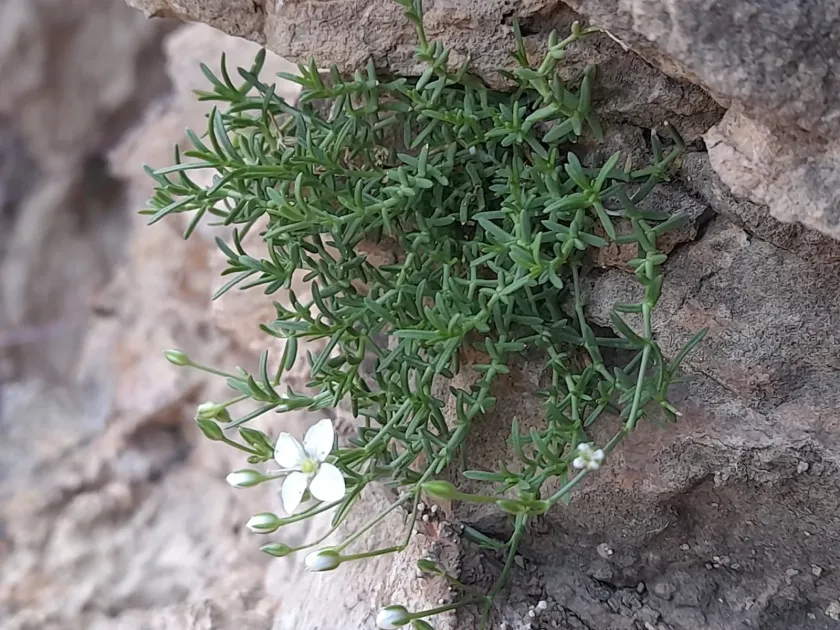
Description
Growing requirements
Moehringia sedoides is a perennial herbaceous plant belonging to the Caryophyllaceae family. It is native to the high-altitude mountainous regions of Europe, where it inhabits rocky crevices and alpine slopes.
Botanically, the plant is characterized by its cushion-forming growth habit. Its foliage consists of narrow, linear leaves that grow in dense rosettes, resembling succulent sedums, which gives the plant its descriptive specific epithet.
The culture requires extremely well-drained, gritty, or stony soil to mimic its natural environment. It thrives in locations with poor soil fertility, where excessive organic matter would otherwise promote weak, leggy growth.
Climate requirements include exposure to full sunlight and cool, airy conditions. While it is highly resistant to cold, it is sensitive to heat combined with high humidity, which can stress the plant and make it susceptible to decay.
Maintenance is minimal. The key to successful cultivation is ensuring that the root zone does not remain waterlogged. Planting in raised beds or troughs with a gravel mulch layer is recommended to prevent crown rot.
Main diseases and pests
The primary threats to Moehringia sedoides are fungal diseases such as root and crown rot, typically caused by poor drainage or excessive soil moisture during the dormant season. Ensuring constant airflow around the foliage is critical.
Insects like slugs and snails may pose a minor threat to young, tender shoots. However, these pests are usually manageable through cultural practices, such as maintaining a clean, dry surface around the base of the plant using coarse mineral top-dressing.