
Moehringia lebrunii
Moehringia lebrunii
Description
Growing requirements
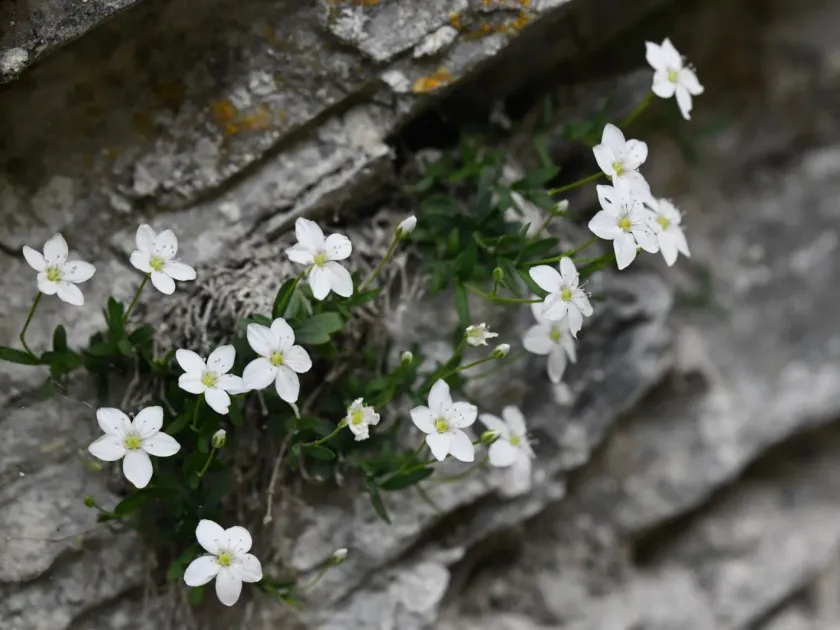
Moehringia lebrunii is a rare herbaceous plant belonging to the Caryophyllaceae family. It is recognized primarily for its specialized botanical characteristics and its niche role within fragile high-altitude ecosystems, making it a subject of significant scientific interest.
The plant originates from specific mountainous regions in Europe, where it is found in rocky crevices and limestone formations. Its distribution is extremely restricted, which underscores its vulnerability and the importance of its preservation in natural habitats.
Botanically, the species is defined by its low-growing habit and specialized foliage designed for water retention. It possesses a highly developed root system that allows it to thrive in mineral-rich but nutrient-poor mountain environments.
Cultivation requirements for this species are strict, demanding a well-drained substrate with a neutral to alkaline pH. Artificial attempts at cultivation must replicate the conditions of a scree slope to avoid root rot and ensure the plant receives sufficient aeration.
The climate must be cool with significant diurnal temperature fluctuations to simulate its native Alpine conditions. The plant is extremely intolerant of competition and requires a clear space to develop without the encroachment of larger, more aggressive plant species.
Main diseases and pests
The primary threats to Moehringia lebrunii include climate change, which disrupts the delicate balance of its high-altitude habitat. Altered precipitation patterns and the melting of permafrost can severely affect the stability of the rocky slopes where it resides.
Pathogenic fungi pose a significant risk, particularly if the plant is exposed to excessive humidity or poor soil drainage. Root diseases can decimate populations, as the plant lacks the vigor to recover from extensive tissue damage.
Pests are generally not a major concern in the plant's native, harsh environment; however, in a controlled garden setting, aphids and mites can cause damage. Regular monitoring is essential to prevent infestations from spreading through a collection.
Invasive species represent a major threat to the survival of local populations. The encroachment of grasses and other hardy mountain plants can lead to the suffocation and eventual disappearance of the species from its historical sites.
Human activities, including tourism and improper soil usage, exacerbate habitat destruction. Conservation efforts must focus on maintaining the physical integrity of the terrain to protect the plant's sensitive root systems from mechanical damage.