
Moehringia bavarica
Moehringia bavarica
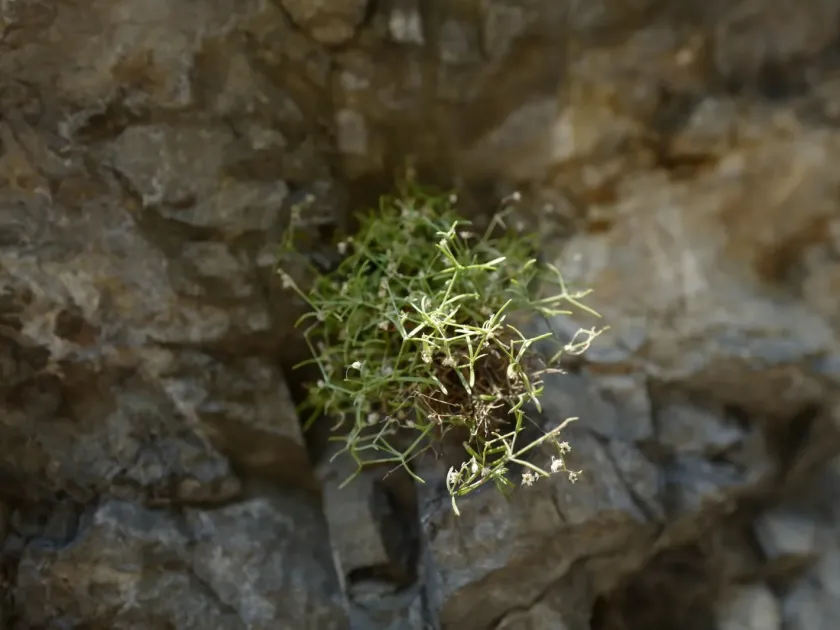
Description
Growing requirements
Moehringia bavarica is a perennial herb belonging to the Caryophyllaceae family. Native to the limestone mountain regions of the Alps, it is highly adapted to growing in crevices and rocky scree slopes where few other plants can thrive.
The plant exhibits a distinct cushion-forming growth habit, making it an excellent candidate for specialized rock gardens and troughs. Its foliage consists of small, narrow leaves that create a dense, low-growing mat that remains evergreen throughout the year in mild climates.
Success in cultivation requires emulating its natural habitat. The soil must be gritty, lime-rich, and possess exceptional drainage properties. A heavy or waterlogged soil will almost certainly lead to the failure of the plant in a landscape setting.
Full sun exposure is a fundamental requirement for the healthy development of this species. It thrives in bright, open positions where it receives direct sunlight, which helps maintain its compact, sturdy structure and promotes profuse flowering.
Maintenance needs are relatively low compared to traditional garden perennials. It does not require frequent fertilization, as excessive nutrients can cause the plant to lose its characteristic shape and become vulnerable to fungal issues.
Main diseases and pests
The most significant threat to the health of Moehringia bavarica is soil moisture stagnation. During the winter months, if the site remains wet, the root collar is prone to rotting, which is often fatal to the plant.
Powdery mildew and various fungal leaf spots can appear if the plant is grown in humid, stagnant air. To prevent this, it is essential to ensure adequate spacing between plants and avoid overhead watering that keeps the foliage damp for too long.
Garden pests such as slugs and snails may target the succulent-like shoots during the spring season. Protecting the plant with a top dressing of sharp grit or non-toxic deterrents is recommended to minimize physical damage.
Environmental stress caused by incorrect soil pH can lead to nutrient deficiencies. Since it is a lime-loving plant, cultivation in highly acidic substrates will weaken its growth and eventually lead to plant decline.
Regular inspection of the plant base is advised to detect early signs of decay or pest activity. Proper air circulation and drainage management are the cornerstones of effective disease prevention for this species.