
Moehringia grisebachii
Moehringia grisebachii
Description
Growing requirements
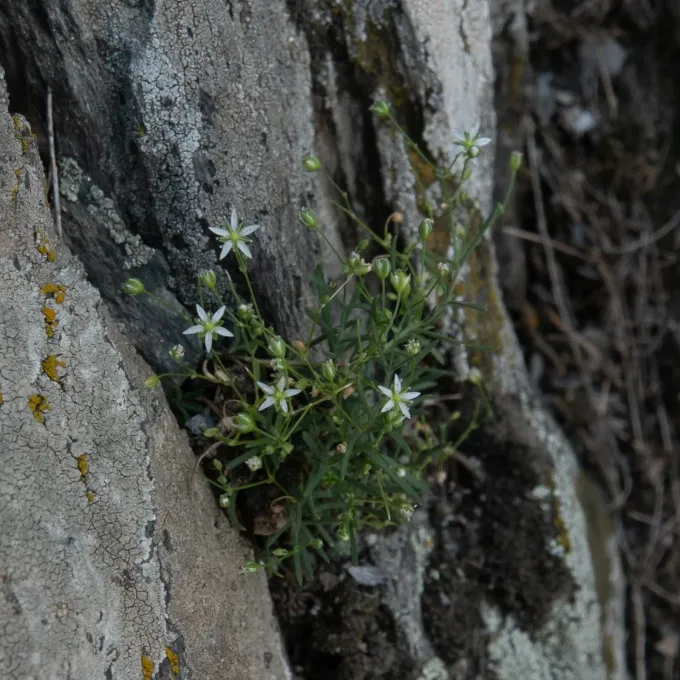
Moehringia grisebachii is a perennial herbaceous plant belonging to the Caryophyllaceae family. It is a specialized botanical species endemic to specific mountainous regions, primarily within the Balkan Peninsula, where it thrives in rocky environments.
The plant is biologically adapted to calcareous substrates and stony slopes, reflecting its evolution in limestone-rich highland habitats. It forms dense, mat-like structures that help it stabilize within crevices and survive in high-wind, alpine conditions.
Regarding its ecological requirements, the species demands high levels of light and excellent drainage. It does not tolerate prolonged waterlogging, as its root system is evolved to extract nutrients and moisture from well-aerated rocky debris.
Botanically, it is characterized by its small, resilient foliage and modest floral development, typical of many species within the Caryophyllaceae family adapted to cold-climate survival. Its growth cycle is synchronized with the short alpine growing season.
While Moehringia grisebachii is not a commercial agricultural crop, it remains a subject of interest for conservationists and botanical researchers. It serves as a key indicator species for the health and biodiversity of the high-altitude Balkan ecosystems.