
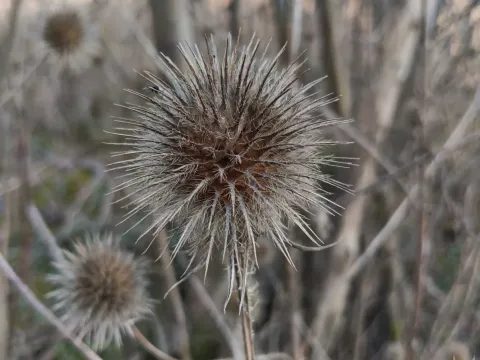
Fuller's teasel
Dipsacus strigosus
Fuller's teasel is a biennial plant, so seeds are preferably sown before winter or in early spring as soon as field conditions allow. Autumn sowing ensures natural stratification of the seeds, which contributes to more uniform germination in the spring.
What the section contains
Fuller's teasel
Open, well-lit areas should be selected for sowing, as the crop is extremely demanding regarding sunlight levels throughout the entire growing season. The seeding depth is usually between 1 and 2 centimeters, ensuring optimal contact between the seed and the moist soil layer.
During the first year, the plant forms a robust basal rosette of leaves, so the planting density must account for the space required for vegetative growth. The recommended sowing pattern includes rows spaced 45-60 centimeters apart to facilitate subsequent care and maintenance.
When using seed drills, it is important to control the uniformity of seed distribution to avoid overcrowding, which leads to flower head deformation and reduced product quality. Irrigation after sowing is mandatory in dry conditions to accelerate the emergence of seedlings.
The optimal time to begin field work varies depending on the region, but the most favorable period is when the soil temperature reaches a stable 8-10 degrees Celsius for spring sowing.
Fuller's teasel, belonging to the Caprifoliaceae family, prefers deep, fertile loamy soils with good drainage. The crop reacts negatively to water stagnation in the root zone, which can lead to rotting of the root collar during the winter period.
The plant demonstrates a moderate demand for soil nutrients and responds well to the application of organic fertilizers before plowing. The soil pH level should be in the slightly acidic or neutral range to facilitate the efficient uptake of macronutrients.
Regarding climate, the crop is highly adaptable, but full development of flower stalks requires sufficient moisture during the spring and summer of the second year. The temperature regime must ensure a long growing season without extreme summer heat stress.
A crucial agronomic requirement is regular inter-row cultivation, especially in the early stages of development, to prevent competition from weeds. Weed control is critical in the first year, as the leaf rosette grows slowly and can be suppressed by more aggressive species.
The crop is resistant to short-term frosts, which allows for successful cultivation in temperate zones. Deep plowing is recommended during autumn soil preparation to ensure aeration and moisture retention for the following season.
The yield of Fuller's teasel is assessed by the number of high-quality burrs formed, which serve as the primary commercial product. Under favorable conditions, a stable output of raw material suitable for the textile industry or floristry can be obtained per hectare.
To increase the yield of quality flower heads, it is necessary to strictly follow fertilization protocols during the budding phase. A lack of nutrition during this critical period leads to the formation of small, deformed heads that lose their market value.
Productivity indicators also depend on the planting density per unit area, which must be optimized based on the specific soil fertility. Timely removal of side shoots can encourage the growth of the main flower head, which is highly valued for industrial use.
It is important to note that the varietal traits of Fuller's teasel determine the intensity of the stiff hooks on the heads. The more pronounced these elements are, the higher the quality of the material for mechanical fabric finishing, which is a key economic metric.
The average yield of flower heads remains stable provided the correct crop rotation and previous crop choices are respected. The plant does not overly deplete the soil, allowing it to be integrated into intensive agricultural systems.
The main diseases of teasel are fungal infections, such as powdery mildew, which occur under high humidity and in dense plantings. If early signs appear, systemic fungicides must be applied to prevent the spread of spores across the field.
Root rots can become a serious threat in heavy, waterlogged soils where gas exchange is impaired. Drainage and the selection of fields that are not prone to spring flooding are essential preventative measures.
Among pests, leaf-eating insects pose the greatest danger, damaging the leaf rosette in the first year of growth. In some years, massive aphid infestations on flower stalks may occur, requiring monitoring of the fields during periods of active growth.
Slugs and snails can damage young seedlings, especially in a wet spring, so installing physical barriers or using specialized molluscicides is recommended. Following a proper crop rotation reduces the buildup of specific soil pathogens in the production zone.
An integrated plant protection system includes both agrotechnical methods—proper timing and density—and the use of chemical agents during critical development phases. Regular phytosanitary inspections help minimize harvest losses.
Harvesting of the flower heads is conducted in the second year of growth when they reach technical maturity and become maximally rigid. Harvesting too early leads to a loss of hook strength, while delaying it may cause drying and seed shedding, which diminishes the head's appearance.
Cutting is performed manually or with specialized machinery, leaving part of the stem for ease of subsequent processing and drying. It is important to perform the work in dry weather to prevent raw material decay during storage and transportation.
Collected heads must undergo a drying process in ventilated areas or specialized dryers at moderate temperatures. Excessive heat can make the structure of the head brittle, which negatively affects its mechanical durability.
After drying, the product is sorted by size and the degree of hook development, forming batches for distribution. Packaging must ensure protection from moisture, as dried teasel is hygroscopic and can deform when wet.
Properly harvested and dried raw material retains its mechanical properties for a long period, making it suitable for both technical industrial purposes and high-quality floral decorations.