
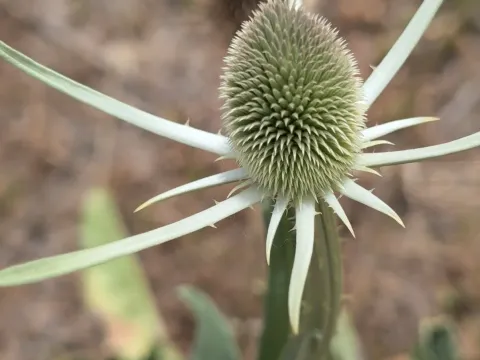
Fuller's teasel
Dipsacus sativus
Fuller's teasel is a biennial herbaceous plant belonging to the Caprifoliaceae family. In its first year, the plant develops a large basal rosette of leaves, and in the second year, it produces tall flower stalks topped with dense, hooked flower heads.
What the section contains
Fuller's teasel
Sowing is typically performed in early spring once the soil temperature reaches 8–10 degrees Celsius. Seeds are sown in rows spaced approximately 50–60 centimeters apart to provide sufficient room for the rosette to thrive during the first year.
The seeding depth should be about 1.5–2 centimeters. Since the seeds are small, shallow planting is essential for successful germination, which usually occurs within two to three weeks under favorable conditions.
Effective weed control is critical during the seedling stage. As the plants are relatively slow to establish in the first few months, regular cultivation or weeding between rows is necessary to prevent competition.
Optimal plant density is vital; overcrowded plants may produce smaller or poorly formed flower heads, which are the main commercial product of this specific crop.
The plant thrives in open, sunny locations. Shaded conditions lead to weak stems and poorly developed hooked heads, reducing the overall quality of the harvest for industrial use.
Fuller's teasel prefers fertile, well-draining loamy soils. Waterlogged areas or heavy, clay-heavy soils are unsuitable as they may lead to root rot and stunted plant growth.
The crop is somewhat drought-tolerant once established due to its strong root system, but consistent moisture during the second-year flowering phase is required to ensure large, dense heads.
The ideal soil pH ranges from 6.0 to 7.5. Soils that are too acidic inhibit plant development and result in softer, less durable hooks on the flower heads.
While teasel can grow in various soils, the application of nitrogen fertilizers in the first year and phosphorus-potassium fertilizers in the second year significantly improves fiber head quality.
Yield is measured by the number of high-quality, mature flower heads per hectare. Professional plantations can produce between 20,000 and 40,000 marketable heads depending on management intensity.
Quality is defined by the stiffness, elasticity, and density of the hooks on the flower heads. These traits are crucial for their application in traditional textile finishing processes, such as raising the nap of wool fabrics.
Post-harvest management, including proper drying and curing, is essential to maintain the structural integrity of the hooks. Proper handling ensures the product meets the requirements of textile manufacturers.
Selecting uniform cultivars is key to achieving a high yield of top-grade heads. Consistency in size and durability across the crop is highly valued in industrial applications.
Modern agronomic practices, including mechanization where possible, help minimize losses and ensure a consistent supply of this specialized industrial raw material.
Common pests include aphids and certain types of weevils that can damage foliage and developing flower stalks. Early detection is necessary to prevent significant infestation of the crop.
Powdery mildew is the most prevalent disease, particularly in seasons with high humidity. It manifests as a white, dusty layer on the leaves, weakening the plant and lowering the quality of the heads.
Root rot can occur in soil with poor drainage. Implementing good crop rotation practices and ensuring proper soil aeration are the primary preventative measures against soil-borne issues.
Chemical control should be applied cautiously, especially during the second year, as the flowers are attractive to bees and other essential pollinators that support healthy crop development.
Maintaining clean rows and removing diseased plants promptly helps to keep the plantation healthy throughout the two-year lifecycle of the crop.
Harvesting takes place in the second year once the flower heads reach full maturity but before they begin to shed their seeds. Timing is crucial to ensure the hooks are at their maximum strength.
Heads are cut with a portion of the stem attached, gathered into bundles or crates for transport to drying facilities. Hand-picking is often preferred to select only the best-formed heads.
Drying must occur in well-ventilated, shaded areas. Direct sunlight can make the delicate hooks brittle and prone to breaking during industrial use, so careful climate control is necessary.
After drying, the heads are sorted and graded based on size and the quality of the hook structure. Standardized grading allows for efficient commercial trading and industrial application.
Stored in a cool, dry place, the dried teasel heads are very stable and can be kept for extended periods, providing a consistent supply for specialized textile finishing operations.