
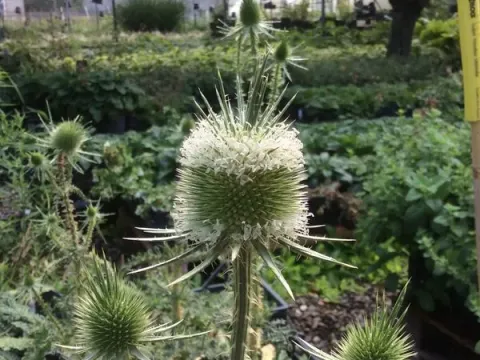
Fuller's Teasel
Dipsacus ferox
Fuller's Teasel (Dipsacus ferox) is a biennial herbaceous plant belonging to the Dipsacaceae family. In its first year, it develops a robust basal rosette of leaves, storing nutrients essential for the rapid growth of the flowering stalk in the second year.
What the section contains
Fuller's Teasel
Sowing should take place in spring once the soil temperature consistently reaches 10–12 degrees Celsius. Maintaining soil moisture is critical during the germination stage to ensure a uniform plant stand across the field.
For commercial cultivation, seeds are sown in rows spaced approximately 50–60 centimeters apart. This spacing allows sufficient room for the plant to develop its large, characteristic flower heads without competing for light or nutrients.
Seeds exhibit good viability, although seeds sown in late autumn may require a period of stratification to break dormancy. Sowing timing is a key factor in determining the plant's vegetative vigor in the first year.
It is best to select sunny, open locations for cultivation, as the plant is highly intolerant of shade. Excessive shading often results in weak, etiolated stems and significantly reduced biomass production.
Fuller's Teasel thrives in fertile, loamy soils with a neutral or slightly alkaline pH. The plant requires well-drained soil, as it is extremely susceptible to root rot in waterlogged or swampy conditions.
Optimal climatic conditions for this crop include moderate weather with sufficient spring and summer rainfall. Although the plant possesses drought-tolerant traits, irrigation during the active growth phase is recommended for high-quality production.
Good agricultural practice requires regular weeding and soil cultivation during the early stages of growth to prevent weed competition. The plant responds well to organic fertilization applied during the rosette stage.
The plant demonstrates significant frost resistance, making it suitable for temperate climates. In regions with severe winters, a light mulch covering may be applied to protect the basal rosette from extreme cold.
Maintaining a clean field is crucial, as the rosette is prone to being overshadowed by faster-growing grasses. Adequate ventilation between plants is essential for overall health and disease prevention.
The agricultural use of Dipsacus ferox centers on the production of decorative flower heads and, to a lesser extent, seed material. Consistent yields depend on maintaining optimal plant density and high soil fertility.
The productivity of the crop is measured by the number of high-quality, fully developed teasel heads per unit of land. Proper field management ensures the longevity and uniformity of the flower heads produced.
The roots and aerial parts also hold value in the pharmaceutical industry due to their chemical composition. Developing consistent harvest protocols is vital for agricultural operations targeting this market.
Field productivity is highest on structural soils with excellent aeration for root development. Regular monitoring and nutrient management are key drivers of stable annual yield figures.
Harvesting at the correct stage of physiological maturity is paramount for ensuring the quality of the end product. Delaying the harvest can lead to seed shedding and a loss of market value.
Common pests affecting the teasel crop include aphids and various types of weevils, which may damage the leaves and developing flower stalks. Early detection through field scouting allows for timely and targeted intervention.
Powdery mildew represents the most significant disease threat, particularly in humid, poorly ventilated areas. Maintaining appropriate row spacing is the most effective cultural method to mitigate this risk.
Root rot caused by excessive soil moisture can decimate a stand. Proper drainage planning is a mandatory step before planting to safeguard the investment and crop viability.
Pest and disease control programs should prioritize environmentally friendly pesticides or biological controls. This is particularly important for plants intended for medicinal or high-quality decorative applications.
In general, Dipsacus ferox is a hardy species with a strong immune system, rarely succumbing to major disease outbreaks when standard rotation and field management practices are followed.
Harvesting occurs during dry, clear weather to ensure the longevity of the harvested material. The flowering stalks are cut and typically tied in small bundles to facilitate easier handling and drying.
Drying should take place in shaded, well-ventilated structures to prevent discoloration caused by direct UV light. This process preserves the natural structural integrity of the teasel heads.
Seed harvesting is conducted after the heads have dried completely, utilizing threshing equipment to separate the seeds from the thorny structures. Proper seed cleaning is necessary for high-quality planting material.
Storage requires cool, dry conditions with constant airflow to prevent mold and insect infestation. Proper storage management ensures that the crop maintains its quality until it reaches the end user.
High-quality, properly dried teasel heads retain their decorative features and pharmacological properties for extended periods, providing long-term shelf stability for agricultural producers.