
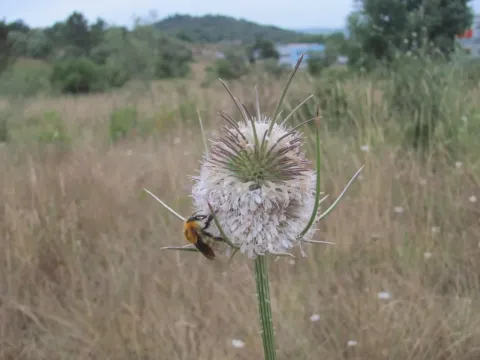
Fuller's teasel
Dipsacus comosus
Fuller's teasel (Dipsacus comosus), a member of the Caprifoliaceae family, is a biennial plant traditionally cultivated for its specialized prickly flower heads.
What the section contains
Fuller's teasel
Sowing typically takes place in early spring, allowing the seeds to germinate once soil temperatures stabilize around 8–10 degrees Celsius.
The seeds should be sown in rows, ensuring a spacing that allows for the formation of a robust rosette during the first year of growth.
Proper field preparation is essential, as the soil must be fine-grained and free of competitive weeds to support the delicate initial seedling phase.
Maintaining a consistent moisture level in the seedbed is crucial to achieving a high germination rate across the cultivated area.
This crop thrives in open, sunny locations with well-drained, fertile soil that avoids excessive water retention.
While adaptable, the plant performs best in neutral to slightly alkaline soil conditions, which support healthy development of the fibrous roots.
Protection from high winds is necessary, particularly during the second year when the flower stalks can reach significant heights and become susceptible to lodging.
Adequate spacing between rows is vital to promote air circulation, which helps reduce the incidence of fungal diseases in dense plantations.
Fertilization with potassium-rich minerals during the spring of the second year encourages the growth of strong, durable flower heads.
The primary yield consists of the dried, lignified flower heads used historically and in specialized niches for textile napping processes.
Yield quality is characterized by the strength, elasticity, and uniform distribution of the hooked bracts covering the flower head.
Proper management of nutrient inputs is directly correlated to the number of harvestable heads per hectare and their structural integrity.
The biological cycle of the plant requires patience, as the harvest occurs only after the completion of the second year's growth phase.
Effective management ensures a consistent supply of materials with the specific hook geometries required for finishing delicate fabrics.
Powdery mildew represents a significant threat to production, especially in areas with high relative humidity or stagnant air conditions.
Root rot and crown rot can develop if the soil remains waterlogged, which is particularly detrimental during the winter transition period.
Aphids and various insect pests can damage tender shoots, potentially reducing the development and size of the floral structures.
Preventative measures include crop rotation and ensuring that no residual weeds provide a host for pathogens or insects between planting seasons.
Integrated pest management strategies are recommended to keep damage below the economic injury level without compromising the quality of the heads.
Harvesting is performed in the second year once the flower heads have hardened and the bracts have fully developed their characteristic hooks.
It is critical to harvest at the correct maturity stage to ensure that the hooks remain flexible yet durable enough for industrial application.
Once cut, the heads undergo a drying process in a shaded, well-ventilated environment to maintain their color and prevent the growth of mold.
Post-harvest handling involves careful sorting to remove any damaged or underdeveloped heads that do not meet industrial standards.
Proper storage in dry conditions is essential for preserving the mechanical properties of the heads before they are shipped to textile manufacturers.