
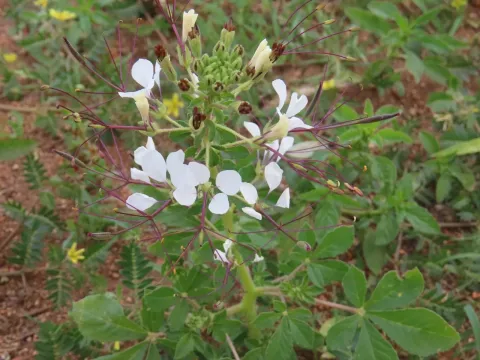
Spider plant
Cleome gynandra
Cleome gynandra, commonly known as the spider plant, is an annual herb of the Capparaceae family. It is widely cultivated as a leafy vegetable in tropical regions, where it is often grown during the rainy season or under irrigation.
What the section contains
Spider plant
For successful germination, seeds require soil temperatures ranging from 20 to 25 degrees Celsius. In moderate climates, direct seeding should only occur after the danger of frost has passed and the soil has sufficiently warmed up.
Starting seeds in seedling trays 3 to 4 weeks before transplanting is a standard practice for growers aiming for an early harvest. This method protects young seedlings and ensures uniform crop establishment in the field.
When sowing in large fields, a spacing of 40 to 50 centimeters between rows is recommended. This provides adequate space for growth and facilitates manual or mechanical weeding between rows.
Sequential planting every 2 to 3 weeks is encouraged to ensure a continuous supply of fresh, tender leaves throughout the growing season, which is crucial for market demand.
The spider plant is highly heliophilic and thrives in full sunlight. Insufficient light leads to etiolated stems and significantly reduces the biomass yield and the quality of the edible leaves.
Well-drained, fertile soil is essential for optimal development. The plant prefers loamy or sandy soils with a near-neutral pH; heavy clay soils that retain excess moisture can lead to root rot and poor performance.
While the crop is relatively drought-tolerant, consistent moisture is required to maximize leaf production. Regular watering during dry spells is highly beneficial for maintaining the succulent texture of the leaves.
Organic matter such as compost or well-rotted manure helps maintain soil structure and provides necessary micronutrients. Nitrogen application during the vegetative phase significantly boosts leaf yield.
The ideal temperature for spider plant growth is between 25 and 30 degrees Celsius. Development slows down significantly below 15 degrees, emphasizing the plant's tropical origin and need for warmth.
The primary part of the spider plant consumed is its leaves and tender shoot tips. They are known for their slightly bitter and peppery flavor, making them a popular ingredient in soups, stews, and side dishes.
Rich in vitamins, minerals, and proteins, this plant serves as a vital nutritional source in many parts of Africa. It is frequently compared to spinach in terms of its culinary utility and preparation methods.
Yields vary depending on soil fertility, moisture management, and harvesting frequency. Under optimal conditions, farmers can achieve high biomass outputs by regularly pruning the plants to encourage branching.
Beyond human consumption, the plant's potential for oil extraction from seeds is a developing area of research, although leaf production remains the dominant economic driver for smallholder farmers.
The economic sustainability of cultivating this crop is high, as it requires relatively low input and responds well to simple traditional agricultural practices, ensuring food security for many households.
Powdery mildew is the most common fungal disease, especially in humid conditions or where plant density is too high. Improving air circulation around the plants is a key management strategy to reduce infection.
Aphids are a significant pest that suck sap from young leaves, causing curling and stunted growth. Integrated pest management, including the use of soapy water sprays or biological controls, is highly effective.
Caterpillars can cause significant defoliation if left unchecked. Frequent field scouting is necessary to detect egg masses and early-stage larvae before they cause extensive damage to the foliage.
Root rot, driven by waterlogged soil, is a critical threat in poorly drained areas. Ensuring proper soil preparation and drainage systems is the best preventive measure against this persistent issue.
Weed management during the first few weeks is crucial, as the spider plant competes poorly with aggressive weeds. Hand weeding or light mulching can mitigate this competitive disadvantage effectively.
Harvesting usually begins 3 to 4 weeks after emergence, once the plants reach a height of 15 to 20 centimeters. Leaves should be picked before flowering occurs to ensure the best flavor and texture.
Regular pruning of the tips encourages the development of lateral shoots, which significantly increases the total volume of the harvest over the lifecycle of the plant.
Post-harvest handling is critical because the leaves are highly perishable. To maintain quality, the produce should be cooled immediately and kept in a shaded, ventilated environment until it reaches the market.
For seed production, selected healthy plants are left to reach full maturity. Harvesting begins when the seed pods turn from green to brown and show signs of drying to prevent premature shattering.
Collected seeds must be threshed, winnowed to remove chaff, and stored in a cool, dry place to maintain high germination viability for the next planting cycle.