
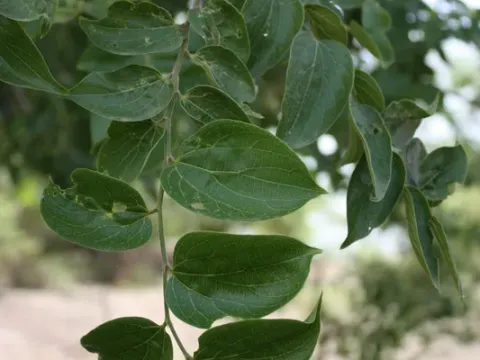
African hackberry
Celtis toka
The African hackberry (Celtis toka) is a deciduous tree belonging to the Cannabaceae family, primarily native to the arid and semi-arid regions of the African Sahel.
What the section contains
African hackberry
This species is highly regarded for its remarkable adaptation to harsh climates, including high temperatures and prolonged dry seasons that limit the growth of other tree species.
It typically grows in diverse soil conditions, ranging from deep alluvial soils along riverbeds to rocky, nutrient-poor substrates, demonstrating significant ecological plasticity.
Optimal growth is achieved in areas with high solar radiation, as the tree requires full sun exposure to maintain its dense foliage and healthy development of its root system.
As a key botanical element of its range, the tree contributes to soil stabilization, preventing erosion in fragile ecosystems while providing critical habitat for local insect and bird populations.
The economic value of the African hackberry is multi-faceted, with its timber being particularly noted for its durability and flexibility, which are ideal for traditional crafts and tool handles.
The fruits produced by the tree are edible and serve as a supplemental food source for local communities, often harvested during the season when other crops are scarce.
In the field of agroforestry, the tree is frequently utilized to provide shade for livestock, which helps reduce heat stress and maintains the overall productivity of pastoral systems.
Additionally, the leaves and young shoots are harvested as supplemental fodder for goats and sheep, making the species an integral part of sustainable livestock management.
Due to its resilience, the African hackberry is increasingly recognized for its potential in urban forestry and reforestation projects aimed at combating desertification in arid lands.