
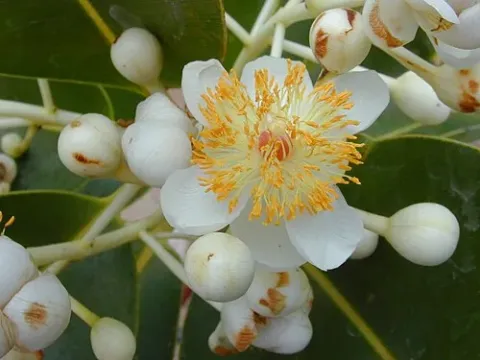
Calophyllum exiticostatum
Calophyllum exiticostatum
Calophyllum exiticostatum is a notable tree species belonging to the Clusiaceae family. Native to tropical regions, this species is well-adapted to high-rainfall environments where consistent moisture availability supports its substantial biomass production.
What the section contains
Calophyllum exiticostatum
The culture thrives in well-drained, nutrient-rich soils that provide stability and adequate air exchange for its root system. It is sensitive to waterlogging, necessitating the selection of slopes or elevated areas for cultivation to prevent root suffocation during peak monsoon periods.
Regarding climate, the tree requires constant tropical temperatures to maintain physiological activity throughout the year. Cold stress is a major limiting factor, and the species is exclusively suitable for humid tropical zones with minimal seasonal variation.
Agricultural management involves careful spacing to manage light competition, especially during the establishment phase. Pruning practices are essential to promote apical dominance and improve the quality of the timber produced by the mature tree.
Economically, the species is highly valued for its hardwood, which is used in high-end construction and furniture manufacturing. Sustainable forest management practices are increasingly adopted to ensure the long-term viability of these plantations.
Fungal pathogens represent the primary biological threat to the health of the plantation. Root and collar rots, particularly in poorly drained soils, can quickly compromise tree vigor and lead to significant mortality if not managed properly.
Boring insects represent a specific category of pests that target the inner bark and vascular tissues. Regular field inspections and the use of physical barriers or targeted biological controls are necessary to minimize damage to high-value timber.
Foliar diseases can weaken the tree's metabolic efficiency, potentially slowing growth rates over the rotation period. Ensuring optimal nutrient levels helps the tree maintain a robust immune system against common regional pathogens.
Invasive weed species can significantly hinder the growth of saplings by competing for resources. Maintaining clear weed-free strips around the base of each tree is a standard practice during the first few years of plantation development.
Climate change poses an indirect threat by shifting rainfall patterns, which may stress the trees and make them more susceptible to opportunistic diseases. Monitoring soil moisture and tree response is critical for adaptive management strategies.