
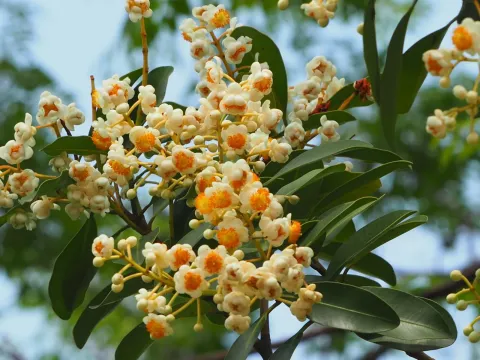
Calophyllum blancoi
Calophyllum blancoi
The propagation of Calophyllum blancoi begins in specialized nurseries where seeds are sown into well-drained substrate. Fresh seeds are prioritized, as they maintain the highest germination rates when planted shortly after collection.
What the section contains
Calophyllum blancoi
Seeds are typically cleared of their fleshy outer coating to prevent fungal growth, which is a common issue during the germination stage. Sowing depth should be minimal, barely covering the seed with light, organic-rich soil.
The best time for sowing aligns with the beginning of the rainy season to capitalize on natural humidity and consistent temperatures. Providing a stable environment between 25 and 28 degrees Celsius is ideal for early development.
Seedlings remain in nursery containers for several months, often until they reach a height of 40 to 50 centimeters. During this time, they require filtered sunlight to prevent leaf scorch, a common risk for young specimens.
Once hardened off, the seedlings are transplanted to their permanent location. Proper spacing is critical to ensure future growth, with common practices involving a 5-meter grid to allow crown development.
As a member of the Clusiaceae family, Calophyllum blancoi thrives in tropical climates characterized by high rainfall and humidity. It is native to areas where the ecosystem supports dense, evergreen forest growth.
Soil requirements focus on fertility and drainage. The species prefers alluvial, deep soils that hold moisture without becoming waterlogged, as stagnant water poses a severe threat to the root system.
Regarding light, the tree is a semi-shade tolerant species in its juvenile stages but matures into a light-demanding tree. Providing appropriate shade initially is a key component of successful silvicultural management.
Soil pH levels should remain in the neutral to slightly acidic range. Areas with high humus content facilitate faster growth rates, providing the necessary nutrients for the tree to build its dense timber structure.
Maintaining a weed-free area around the base of the tree is essential in the first three years of growth, as the tree is susceptible to competition from faster-growing tropical grasses and scrub.
The economic yield of Calophyllum blancoi is derived from its high-quality timber. The wood is dense, durable, and highly prized in furniture manufacturing and specialized construction due to its resistance to decay.
Productivity is measured over a long rotation period, typically spanning 40 to 60 years. Strategic thinning of the plantation is required to ensure that the remaining trees grow with straight and thick trunks.
Seeds of the tree also hold minor economic value in traditional applications, as they contain oils that have been studied for their chemical and pharmaceutical potential.
Yield optimization involves regular monitoring of growth rates and nutrient supplementation, particularly in the early stages, to ensure the trees reach commercial maturity as efficiently as possible.
The sustainable management of these trees allows for long-term yields while maintaining the structural integrity of the surrounding ecosystem, ensuring the species remains a viable agricultural and forestry asset.
Fungal pathogens represent the most significant threat to the health of the species, particularly in regions where humidity levels remain excessively high for extended periods, leading to root rot.
Insect pests, including stem borers and foliage-feeding beetles, can severely impact timber quality. Integrated pest management strategies are often implemented to mitigate these risks without relying solely on chemical inputs.
Environmental stressors such as uncharacteristic drought periods can weaken the trees, making them more susceptible to subsequent disease attacks or infestations.
Invasive plant species can outcompete the young seedlings in their natural environment, often requiring manual removal to ensure the survival of the plantation plots.
- Root rot caused by poor soil drainage.
- Infestation by wood-boring beetle larvae.
- Defoliation from localized insect outbreaks.
Harvesting timber from Calophyllum blancoi is conducted through selective logging, which preserves the forest canopy and prevents soil erosion in hilly tropical terrains.
Seeds are harvested manually once they fall naturally or are easily detached from the branches. Proper post-harvest handling is required to store the seeds in a cool, dry place to maintain viability for future planting.
Timber drying is a critical post-harvest step. Because the wood is dense, it requires controlled kiln drying to prevent warping and cracking, ensuring the final product meets industrial standards.
Harvest planning takes into account local regulations and the maturity age of the specific stand, ensuring that only trees with sufficient trunk diameter are selected for processing.
Efficient logging practices and the utilization of wood remnants for secondary purposes contribute to the economic sustainability of the plantation operation, reducing waste and maximizing resource utility.