
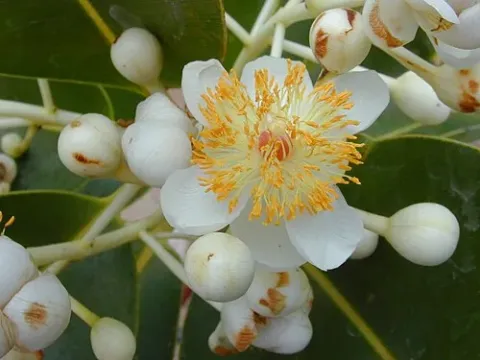
Calophyllum griseum
Calophyllum griseum
Calophyllum griseum is a notable species within the Clusiaceae family, indigenous to the tropical rainforests of Southeast Asia. It is a slow-growing evergreen tree that has adapted to thrive in highly competitive forest environments with high rainfall and consistent temperatures.
What the section contains
Calophyllum griseum
The cultivation of this species requires a strictly tropical climate. It thrives where temperatures remain between 22 and 32 degrees Celsius year-round. It is highly intolerant of frost, which makes it unsuitable for cultivation outside the tropical belt without controlled greenhouse environments.
Regarding soil requirements, the tree performs best in deep, well-drained loamy soils. It cannot tolerate waterlogged conditions, as the roots are highly susceptible to hypoxia and fungal rot if the soil remains saturated for extended periods.
Agricultural management includes site selection that provides protection from strong, drying winds. Young saplings require a shaded nursery phase to prevent rapid transpiration and heat stress, slowly acclimating them to full sun as they mature.
Economically, the species is valued for its hard and durable timber. In addition to wood production, ongoing research into its phytochemical composition suggests potential in the development of antimicrobial and anti-inflammatory compounds derived from its resinous sap.
Root rot caused by Phytophthora or similar fungal pathogens is the primary threat to plantation health. These pathogens proliferate rapidly in poorly drained soils, making site preparation an essential agricultural activity.
Stem-boring beetles present a significant challenge by creating galleries within the wood, which degrades timber quality and weakens the tree's structural integrity. Systematic monitoring and prompt removal of infested wood are recommended.
Defoliating insects can cause significant damage to young trees, reducing photosynthetic capacity and slowing growth rates. Integrated pest management strategies, focusing on biological controls, are generally preferred to chemical pesticides.
Competition from invasive fast-growing weeds can choke young saplings, depriving them of sunlight and essential nutrients. Routine clearing of the forest floor around the trunk is vital during the first few years of growth.
Climate change and prolonged drought periods increase the vulnerability of these trees to pests. Ensuring supplemental irrigation during extreme weather events is an important measure to maintain tree vigor and resistance.