
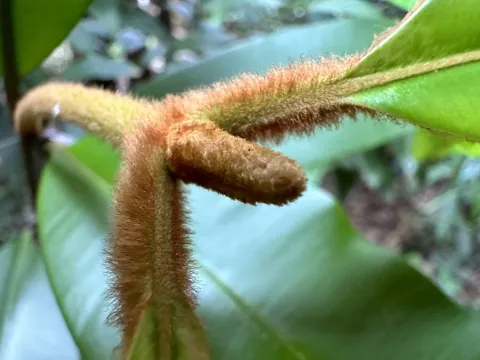
Calophyllum lanigerum
Calophyllum lanigerum
Propagation of Calophyllum lanigerum is primarily achieved through seeds. As a tropical evergreen species, seeds must be planted immediately after collection to ensure high viability, as they tend to lose germination potential rapidly.
What the section contains
Calophyllum lanigerum
The ideal germination substrate should be consistently moist and provide excellent drainage. Maintaining a temperature range between +25°C and +30°C is essential for optimal sprout emergence.
Seedlings are typically raised in controlled nursery environments or shaded greenhouses. Young plants require protection from intense direct sunlight during their initial growth stages to prevent desiccation.
Transplanting the saplings to their permanent plantation site is recommended during the onset of the rainy season to facilitate root establishment and adaptation to the natural soil profile.
Planting density varies based on the intended land use, typically ranging from 200 to 400 trees per hectare, allowing sufficient space for canopy expansion and root competition management.
Calophyllum lanigerum is a member of the Clusiaceae family and originates from the tropical rainforests of Southeast Asia. It requires a stable tropical climate with high, year-round rainfall.
The species thrives in fertile, well-draining alluvial or lateritic soils. While it favors moist conditions, it is sensitive to waterlogged sites that lack proper soil aeration.
The tree prefers low-to-mid altitude landscapes in tropical regions. It is highly sensitive to cold temperatures, and survival decreases significantly if exposed to conditions below +18°C.
Naturally, the tree develops a straight, cylindrical trunk, which is highly valued for timber production. It responds positively to balanced organic nutrient applications during the juvenile phase.
Although it requires substantial light for mature photosynthesis, seedlings demonstrate moderate shade tolerance, allowing them to establish under the canopy of more mature trees.
Yield estimation for Calophyllum lanigerum is focused on long-term biomass accumulation and wood volume. As a slow-to-medium growing species, it requires patience for mature harvest cycles.
Beyond timber, the fruit of the tree has garnered interest in the pharmaceutical sector due to the presence of calanolides, which are chemical compounds under study for various medicinal applications.
Quantifiable commercial yields of fruit per hectare are still being documented, as much of the species' production remains concentrated in wild harvest or limited small-scale plantings.
The timber quality is recognized for its durability and aesthetic wood grain, making it a preferred choice for high-end furniture manufacturing and fine joinery work.
Commercial timber harvest is typically viable 30 to 50 years after establishment, provided that consistent silvicultural management and growth monitoring have been performed.
The species is susceptible to various fungal pathogens, particularly in dense plantations where poor airflow and high humidity create a conducive environment for disease development.
Typical insect pests include defoliators and wood-boring beetles that can compromise both the vigor of the tree and the physical integrity of the harvestable timber.
Young plantations are often vulnerable to damage from local wildlife, including rodents and larger ungulates, which may strip bark or damage terminal shoots.
Root rot diseases present a primary concern in sites with poor soil drainage. Maintaining optimal soil structure is crucial for preventing the spread of soil-borne pathogens.
Effective management involves an integrated approach, utilizing site-specific health assessments and targeted biological control strategies to maintain plantation stability.