
Calophyllum candidissimum
Calophyllum candidissimum
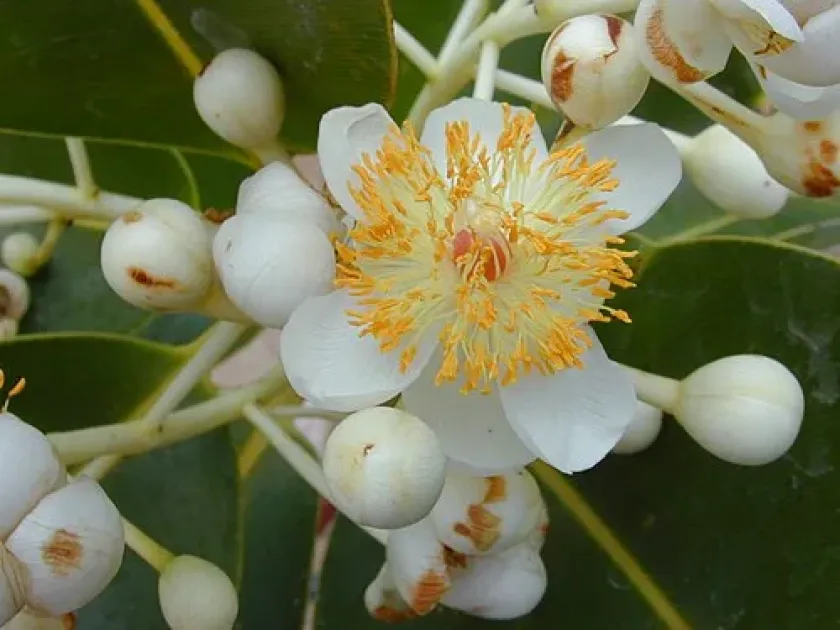
Description
Growing requirements
Calophyllum candidissimum is a tropical tree species belonging to the Clusiaceae family. Native to humid tropical regions, this tree is well-adapted to high precipitation and consistent temperatures throughout the year, making it a valuable subject for tropical forestry.
Successful cultivation requires deep, fertile, and well-drained soils. The species thrives in environments where soil moisture remains constant, but it is highly susceptible to waterlogging, which necessitates careful site selection and the installation of effective drainage systems.
Climatic conditions for this culture must mimic a tropical rainforest environment. It requires high humidity levels and avoids any exposure to frost or prolonged dry spells. Optimal growth is achieved under partial shade during the initial development phases, shifting to full sun as the tree matures.
Botanically, the species is recognized for its dense, high-quality timber. The leaves typically exhibit a parallel venation pattern, an evolutionary adaptation that facilitates efficient moisture transport and cooling in hot climates.
The primary economic focus for this tree is timber production. Its wood is highly valued in construction and furniture making due to its inherent strength, durability, and natural resistance to decay, making it a sustainable asset in tropical land use.
Main diseases and pests
Fungal infections of the root system are the most significant threats to Calophyllum candidissimum, particularly in poorly drained soil. Maintaining soil aeration and preventing water stagnation is the primary defense strategy against these pathogens.
Wood-boring insects present a major risk to mature trees, potentially compromising the structural integrity of the timber. Integrated pest management, including regular tree monitoring and the use of pheromone traps, is essential for maintaining plantation health.
Sanitation is a vital aspect of forest management for this species. Removing infected branches or stems promptly helps contain the spread of fungal spores and prevents wood-boring pest populations from establishing themselves in the canopy.
Competition from invasive plant species can hinder the growth of young trees by stripping soil nutrients and blocking sunlight. Regular maintenance of clearings and understory management is necessary during the establishment phase of the plantation.
Environmental stressors, such as extreme storm events, can cause mechanical damage. Planting in patterns that provide mutual wind protection and ensuring strong root development through adequate fertilization are recommended practices.