
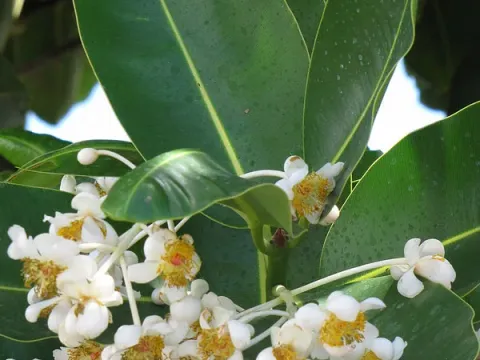
Alexandrian laurel
Calophyllum sil
Propagation of the Alexandrian laurel is typically performed using seeds harvested from mature fruits. Given the hard seed coat, scarification is often used to ensure rapid and uniform germination.
What the section contains
Alexandrian laurel
Seeds are sown in nursery beds with well-drained, nutrient-rich substrates, maintaining high humidity and steady tropical temperatures throughout the incubation phase.
Field establishment is best timed with the onset of the rainy season to allow young saplings to establish deep root systems before the onset of drier conditions.
Spacing requirements are significant; plants should be set 5 to 7 meters apart to account for the tree's dense canopy and long-term horizontal growth habit.
The use of compost and balanced organic fertilizers during the initial planting phase is highly recommended to stimulate root development and sapling resilience.
Calophyllum inophyllum, belonging to the Clusiaceae family, is a slow-growing evergreen tree adapted to moist, sandy coastal environments.
The species requires a strictly tropical climate with average temperatures consistently above 20°C, as it possesses no tolerance for frost or cold winds.
A key agronomic advantage is its high salinity tolerance, which allows it to thrive in coastal zones where few other agricultural crops would survive.
Full sun exposure is essential for high-yield fruit production; shaded areas significantly reduce the tree's vigor and its reproductive potential.
Well-drained soil is non-negotiable; while the plant is adaptable to various soil textures, it is highly sensitive to waterlogged sites that foster root decay.
The primary economic output of this crop is the nut, which contains a high percentage of oil commonly known as tamanu oil, valued in both traditional and modern medicine.
Trees typically reach their first stage of economic yield between 7 and 10 years after planting, with productivity increasing significantly as the tree matures.
A healthy, mature tree can produce between 50 and 100 kilograms of fruit annually, provided that soil moisture and sunlight are managed efficiently.
Harvesting cycles usually occur twice a year, which allows farmers to stagger labor requirements and maintain a steady supply chain for oil processing.
Regular crown pruning is an essential management practice to improve light penetration into the interior of the tree, directly enhancing fruit production.
Fungal diseases affecting the leaves and branches are the most significant threats, especially in areas with poor airflow and excessively high humidity.
Pests such as aphids and leaf-eating caterpillars frequently infest young shoots, requiring consistent monitoring to avoid stunted growth in juvenile trees.
Root rot is a persistent risk in poorly managed plantations, particularly where heavy soils prevent proper water drainage during heavy monsoonal rains.
Integrated pest management strategies are encouraged to protect the delicate balance of the ecosystem and ensure the purity of the final oil extract.
Early detection of infections and the maintenance of sanitary plantation conditions are the most effective ways to prevent widespread crop failure.
Manual labor remains the standard for harvesting, as the topographical nature of many coastal plantations makes large-scale mechanization difficult.
Once harvested, the fruit pulp must be removed promptly to prevent fermentation, which can degrade the oil quality and alter its chemical profile.
Drying is performed by spreading the nuts in the sun for several weeks until they reach the correct moisture content for stable, long-term storage.
Storage facilities must be dry, well-ventilated, and protected from vermin to prevent rancidity and ensure the seeds remain viable for processing.
Industrial processing involves cold mechanical pressing, which extracts the oil without heat, preserving the high fatty acid content essential for the cosmetic market.