
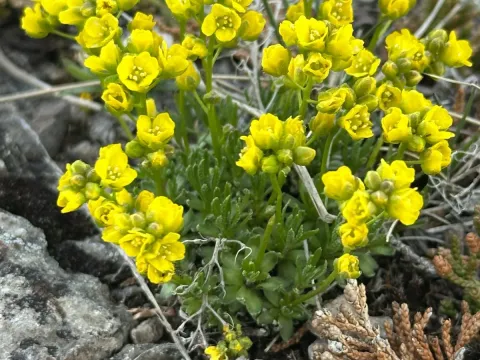
Draba oligosperma
Draba oligosperma
Draba oligosperma is a perennial herbaceous plant belonging to the Brassicaceae family. Native to the high-altitude regions of North America, this plant is well-adapted to harsh environments, typically growing in rocky outcrops and alpine meadows.
What the section contains
Draba oligosperma
Botanically, it forms dense, cushion-like mats consisting of small, linear leaves arranged in rosettes. During the spring blooming period, the plant produces short stalks with bright yellow, four-petaled flowers, creating a vibrant display of color.
To cultivate this species, it is essential to provide well-drained, gritty, or sandy soil. It thrives in soils with low fertility, mimicking the conditions of its natural rocky habitat. Heavy clay or nutrient-rich soil should be avoided, as they can cause root rot.
The plant requires full sun exposure to maintain its compact, cushion-like growth habit. In shaded environments, the rosettes tend to become leggy and lose their aesthetic appeal, making sun-drenched rock gardens the ideal location for planting.
In landscaping, Draba oligosperma is highly valued for its use in alpine rock gardens, trough gardens, and as a groundcover in xeric (dry) landscaping. Its hardiness and slow-growing nature make it a perfect choice for specialized horticultural projects.
The most significant threat to the health of this plant is poor drainage. If the soil remains saturated during the winter or early spring, the crown and root system are highly susceptible to fatal rotting.
Fungal issues, particularly powdery mildew, can occur if the plant is grown in conditions with stagnant air or high humidity. Maintaining proper spacing and planting in well-ventilated areas is the best defense against fungal outbreaks.
Crucifer flea beetles are common pests that may feed on the foliage during the early stages of the growing season. If infestations become severe, the use of targeted insecticidal soap or biological control methods may be necessary to preserve the plant.
Snails and slugs are potential threats, especially in humid climates, as they may graze on the soft leaves of the rosettes. Simple physical barriers, such as crushed gravel around the base of the plant, can help deter these pests from reaching the foliage.
Lack of maintenance regarding weed encroachment is another challenge. Because Draba oligosperma is a small and relatively slow-growing plant, aggressive weeds can easily outcompete it for light and space if the surrounding area is not kept clean.